
-
Laboratory Animal Medicine Unit
Veterinärmedizinische Universität Wien
Veterinärplatz 1
A-1210 WienBuilding HA/ 2nd floor
Phone +43 1 25077 2801
Fax +43 1 25077 2809
Email: nina.lang@vetmeduni.ac.at
VetBioModels: Transgenic and Reproductive Services for Mouse Models
The mouse remains the most important animal model in biomedical research. While global repositories maintain vast catalogues of cryopreserved strains, they cannot cover every specific genetic modification required for a given research project. Furthermore, archived lines must be rederived into live animals before experimental work can begin.
VetBioModels — the service platform of the Unit of Laboratory Animal Medicine at the University of Veterinary Medicine Vienna — addresses both needs. We provide the reproductive and transgenic technologies required to generate custom mouse models, recover cryopreserved strains, and support breeding colonies.
Our services are available to academic and corporate researchers throughout Austria and across Europe.
Assisted Reproduction Services
We apply assisted reproductive technologies (ART) to manage, protect, and expand mouse colonies.
Revitalisation and Rederivation
Whether a strain needs to be revitalised from cryopreserved material, or animals need to be rederived to establish a defined health status, the process covers:
- Logistics and quarantine: transport of frozen material, and a dedicated quarantine facility for the import of live animals from non-approved sources.
- Rederivation to SOPF status: following IVF or embryo transfer, animals are maintained under barrier conditions to produce offspring with SOPF (Specific and Opportunistic Pathogen Free) health status.
- Validation and delivery: tissue samples are provided for genotyping, and confirmed animals are shipped according to the receiving institution's health and transport requirements.
Rapid Colony Expansion
When large cohorts of age-matched animals are required within a short timeframe, conventional breeding is often too slow. By combining in vitro fertilisation (IVF) with embryo transfer, cohorts of up to 90 animals can be produced within a single generation. Animals are bred and maintained under barrier conditions, genotyped as required, and delivered at the age and health status needed for the planned study.
Cryopreservation
The European Mouse Mutant Archive (EMMA) is designed for the archiving and sharing of strains with the wider research community. For unpublished models, or simply as a backup of a valuable line, we offer cryopreservation as a private service: the same EMMA protocols are applied, but the archived material remains reserved exclusively for the depositing researcher.
Whether sperm or embryo freezing is the more suitable option depends on the strain's genetic background, the complexity of the mutation, and the intended timeline for revitalisation. We advise on the appropriate strategy on a case-by-case basis.
Ovary Transplantation (Strain Rescue)
When breeding difficulties, genetic issues, or gaps in colony management leave only a few aged, non-reproducing females, a strain is at risk of being lost. Where no cryopreserved backup exists, ovaries from the affected females can be transplanted into young, ovariectomised recipients of the same genetic background (or into immunodeficient recipients for mixed or outbred lines).
Generating New Genetically Modified Models
We offer several routes to generating custom mouse models, depending on the complexity and timeline of the project.
1. CRISPR/Cas-Mediated Editing (Electroporation)
For knockout, knock-in, and point-mutation models, zygote electroporation provides an efficient route to gene editing. The pipeline includes:
- Guide RNA design (crRNA + tracrRNA) and DNA template preparation.
- Electroporation and embryo transfer into pseudopregnant recipients.
- Genetic validation of F1 offspring by target sequencing or whole-genome sequencing to rule out off-target effects.
2. Pronuclear Microinjection & ES Cell Targeting
For larger constructs such as BACs or YACs, classical microinjection and embryonic stem (ES) cell approaches remain the appropriate method. These services can be requested as individual modules or as a complete pipeline:
- DNA construct preparation and ES cell transfection.
- Derivation and screening of individual ES cell clones.
- Pronuclear injection of DNA into zygotes, or ES cell injection into blastocysts.
- Chimaera breeding and verification of germline transmission.
3. Electrofusion & Tetraploid Complementation
By electrofusing two-cell-stage embryos into tetraploid hosts, mice derived entirely from ES cells can be generated in a single generation, without a chimaeric intermediate stage.
Additional techniques, including artificial oocyte activation and somatic cell nuclear transfer (SCNT), are expected to become available at our facility in the near future.
Experimental and Surgical Support
Beyond model generation and strain recovery, we support in vivo projects with:
- Surgical procedures: from vasectomy and ovariectomy to tissue transplantation under the kidney capsule or implantation of technical devices.
- Experimental support: immunisation protocols and biological sample collection.
- Methodological consultation: guidance on experimental design, including anaesthesia, analgesia, and the 3Rs principles (Replacement, Reduction, Refinement).
The laboratory environment is set up according to each project's specific requirements.
Health Status, Pricing, and Logistics
- Health status: All mice delivered from our facility carry SOPF (Specific and Opportunistic Pathogen Free) status, verified through our quarterly health monitoring programme, with individual animal testing available on request.
- Pricing: Pricing for all services is available on request. As with any biological procedure, outcomes cannot be guaranteed, and fees remain due once a project has been carried out. Fees are structured to cover multiple attempts, for as long as this remains scientifically reasonable, rather than being capped at a fixed number of experimental days or injected embryos.
- Logistics: We handle the import and export of live mice and cryopreserved material, hold the necessary licenses, maintain contact with the relevant authorities, and work with specialised couriers (courier charges apply separately).
If you are planning a project that needs a new mouse model, a rescued or revitalised strain, or experimental support of any kind, our team can advise on the appropriate approach and timeline.
For additional information and a price list, please contact: biomodels@vetmeduni.ac.at.

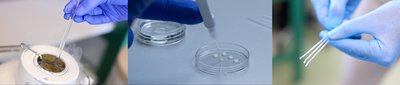
If you are working with a genetically modified mouse line — whether you want to archive a strain you no longer breed actively, or you are searching for an existing model for your research — our team can advise you on the process, requirements, and timelines involved.
- EMMA Director: Prof. Dr. Maik Dahlhoff
- EMMA Archive Manager: Dr.med.vet. Auke Boersma
- Email: emma-vienna@vetmeduni.ac.at