- VetCore /
- Research Units /
- Mass Spectrometry /
- Targeted Analysis and Quantification of Small Molecules and Peptides
-
Head of Proteomics
Ao.Univ.-Prof. Dr.nat.techn. Dipl.-Ing. Ebrahim Razzazi-Fazeli
T +43 1 25077-3216
E-Mail

Targeted Analysis and Quantification of Small Molecules and Peptides
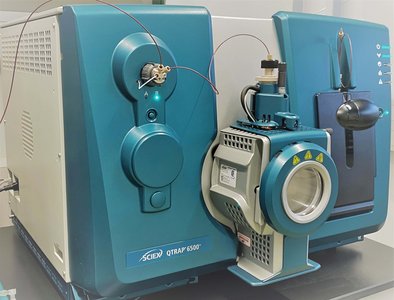
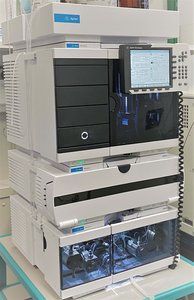
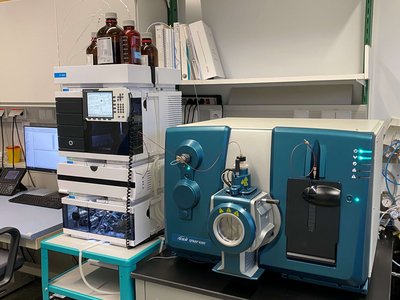
The Sciex QTRAP 6500+ is a triple quadrupole mass spectrometer including a linear ion trap. The MS system is coupled to an Agilent 1290 Infinity II UHPLC and offers a broad range of high-sensitive quantitative applications and targeted quantitative analyses of small molecules like metabolites, food and secondary plant components, pharmaceuticals or toxins. Available acquisition modes and options are: precursor and product ion scans in Q1 and / or Q3, MRM, MS3, linear ion trap scan modes as well as a SelexION+ differential mobility separation option.
This system is offered in rental service mode.
The Thermo Q Exactive Plus is a high-resolution mass spectrometer coupled to a Vanquish Horizon UHPLC via a heated electrospray ionization source (HESI). The system combination is used for targeted quantification of small molecules and metabolomics analyses in rental service mode. The system offers a broad range of acquisition modes like: full MS, all ion fragmentation, data-dependant MS2 (Top N), targeted SIM, and PRM.
Sample Preparation Equipment for Small Molecule Analysis

Off-line SPE 24-Port Vacuum Chamber
Solid phase extraction (SPE) is a routinely applied step in sample preparation for small molecule analysis in biological sources like serum, urine, food and other complex matrices. It enables both removal of interfering biological matrix components as well as enhancing the concentration of analytes in LC/MS samples. Due to the complex chemistry of analytes and matrices you will have to find the optimal column type and size out of a variety of SPE sorbent materials. Bringing the columns of your choice as well as necessary solvents you can process your samples using our 24-port vacuum chamber.
For analysis of plasma protein binding in pharmacokinetic studies analysis of free and bound fraction of your compound of interest can be performed by equilibrium dialysis. The device is available and can be used at VetCore, you have to bring the equilibrium inserts suitable for your compound.
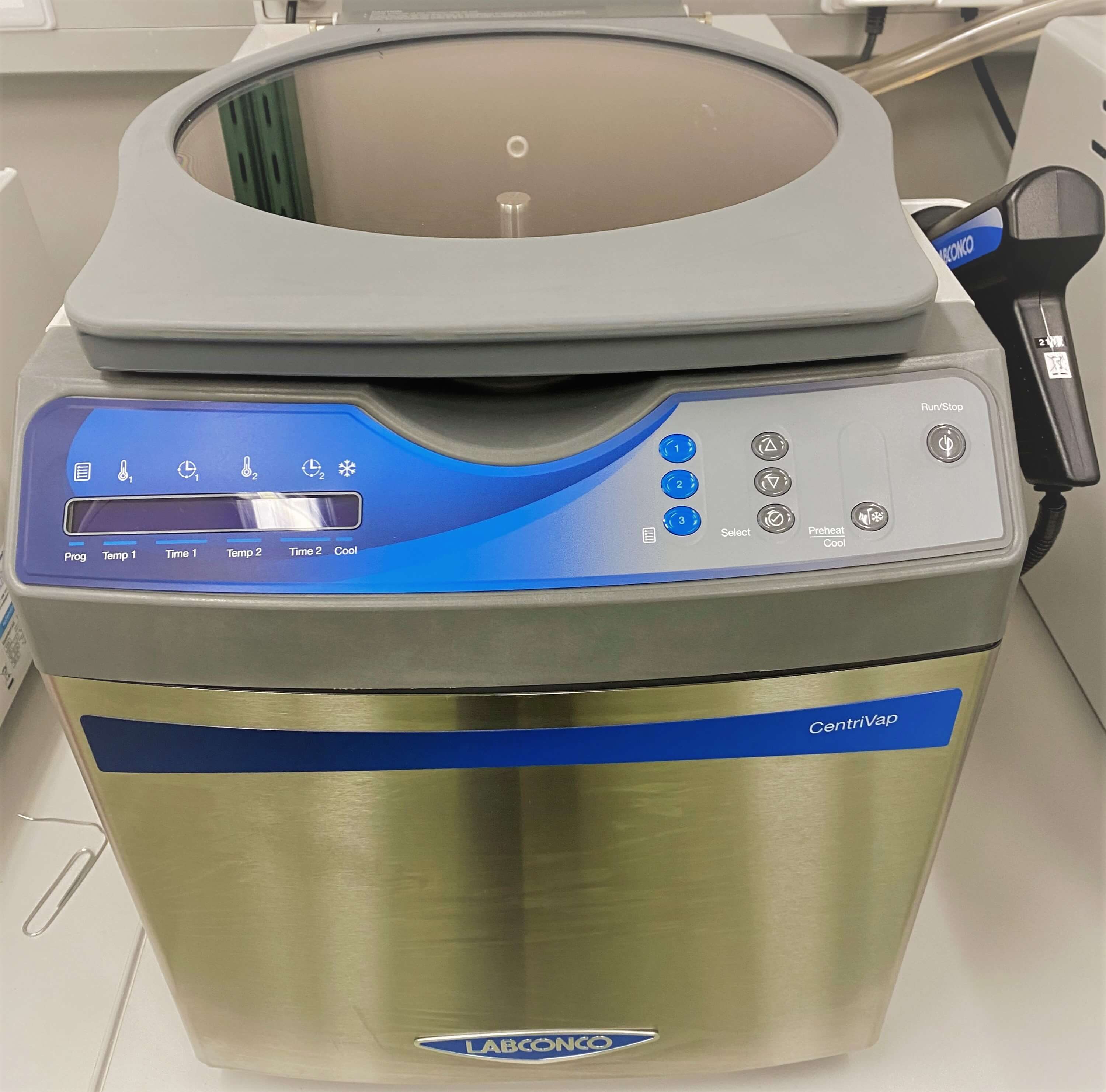
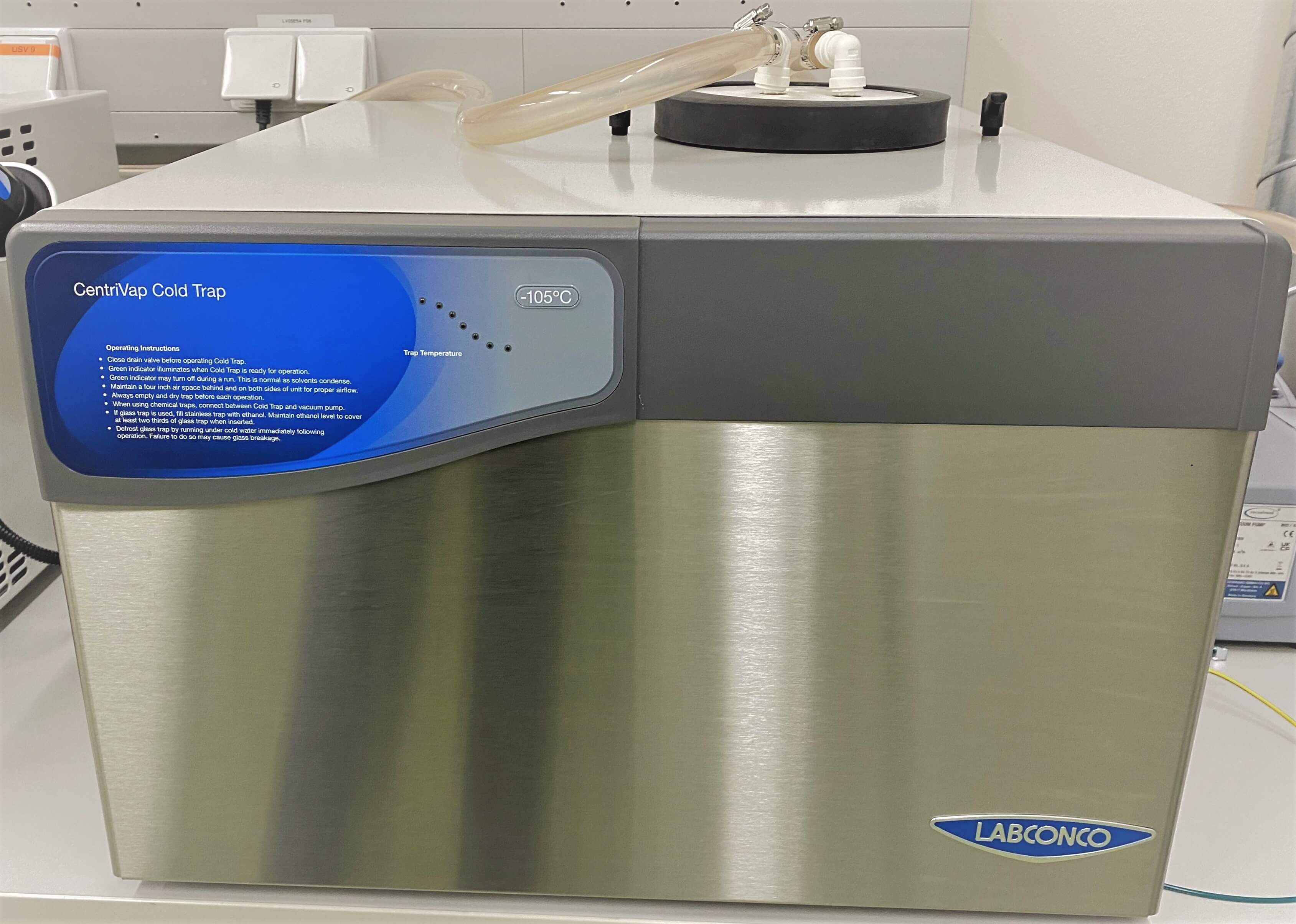
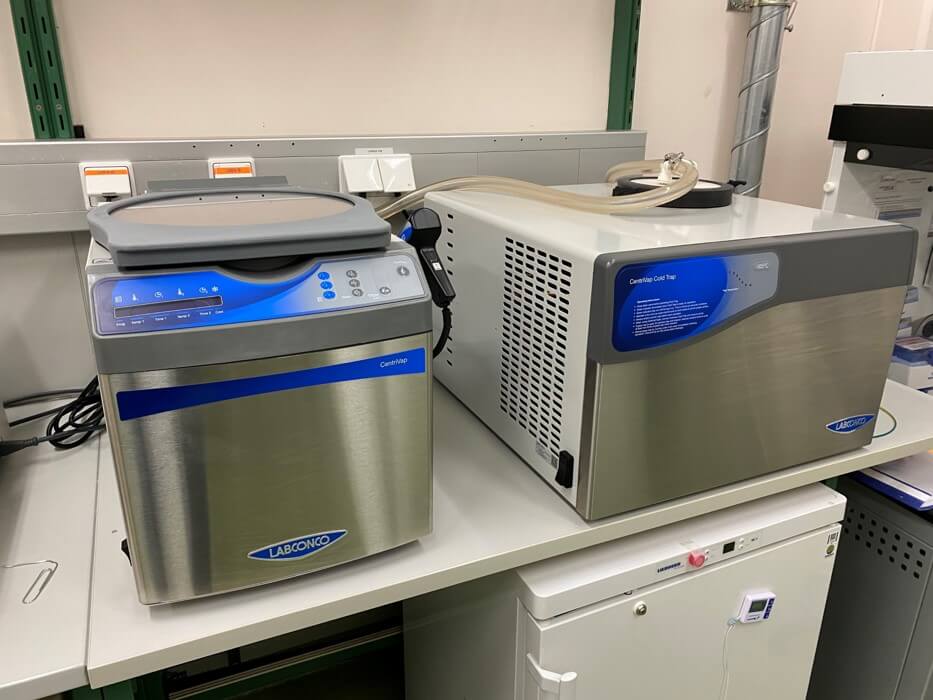
The CentriVap Refrigerated Concentrator, combined with the CentriVap -104°C Cold Trap, uses centrifugal force and vacuum with or without heat to rapidly evaporate and condense solvents from biological and analytical samples. Centrifugation eliminates foaming as vacuum is applied and also concentrates the solute in the bottom of the vial. This allows recovery of solutes from different sample volumes. The unique advantage of this concentrator is that it may be cooled to -4°C to prevent damage to heat labile samples. For faster evaporation, the chamber can also be warmed during processing. As companion to the Concentrator, the CentriVap Cold Trap protects the vacuum pump by trapping moisture at -104°C, vapors and corrosive fumes as they evaporate from the samples.