Springe zum Hauptinhalt Springe zur Lebensmittelmikrobiologie Navigation

The Rate-Yield Balance Index

1.1.2026- 31.12.2028

This project aims to develop an advanced quantitative PCR (qPCR) panel to assess rumen microbiome stability and function. By targeting key metabolic marker genes, the project will establish a novel diagnostic tool that generates a single, actionable metric—the Rate-Yield Balance Index. This index is designed to capture microbial imbalances in the rumen that precede visible health or production problems. The approach provides a rapid, non-invasive, and cost-effective method to monitor rumen microbial performance. The RYBI tool will support veterinarians, nutritionists, and livestock producers by enabling early detection of dysbiosis and metabolic inefficiencies, thereby facilitating timely nutritional or management interventions. This project is funded by the strategic area of the Austrian Competence Centre for Feed and Food Quality, Safety & Innovation.

FFoQSI

A reverse ecology approach towards predicting Salmonella population structure and persistence from genomic data

 1.1.2026-31.12.2028

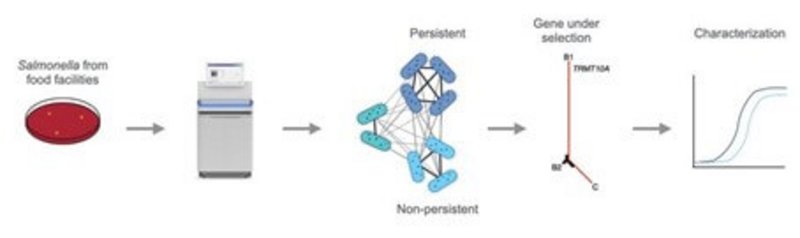
The goal of this project is to predict and test genomic adaptations that enable the persistence of Salmonella populations from highly relevant serotypes in food and the food processing environment (facility). The central hypothesis is that fine-scale populations within each serotype have differential adaptations that enable specific Salmonella populations to persist more than others. Leveraging large amounts of publicly available whole-genome sequencing (WGS) data and the associated metadata, persistent strains within these populations will be defined with respect to formal definitions used by food regulatory and public health agencies. Together, identifying and predicting genomic adaptations within serotypes that promote persistence will enable more targeted approaches to preventing and controlling recurring Salmonella contamination events in the food industry. This work is supported by the Austrian Competence Centre for Feed and Food Quality, Safety & Innovation (FFoQSI GmbH), funded under the COMET K1 programme managed by FFG

FFoQSI

Microbial contamination in the drinking water pipe system – correlation with post weaning diarrhea in pig farming

08.11.2024 - 30.04.2027

Drinking water quality is a key determinant of animal health, welfare, and productivity in livestock systems. Microbial contamination, particularly through biofilms in drinking-water pipe systems, represents an underestimated risk and may contribute to the persistence of undesirable and potentially pathogenic microorganisms. The DaFNE project MikroWaSta aims to characterize microbial communities in farm drinking-water systems and to identify factors influencing water quality in animal production. By integrating classical microbiology, metagenomic sequencing, and innovative flow cytometry-based approaches, water and biofilm samples will be analyzed in cooperation with the Medical University of Graz and the Center for Education and Research in Raumberg-Gumpenstein. The project aims to clarify the role of microbial communities in water and biofilms within water systems and drinking facilities. It will also examine whether the administration of antibiotics through water affects the microbiome of the water and biofilms. The findings will help develop concrete measures to improve animal health. This project is funded by the Austrian Federal Ministry of Agriculture, Forestry, Climate and Environmental Protection, Regions and Water Management (BMLUK) within the DaFNE programme.

Microbial dynamics along the food chain

01.10.2022- 31.3.2026

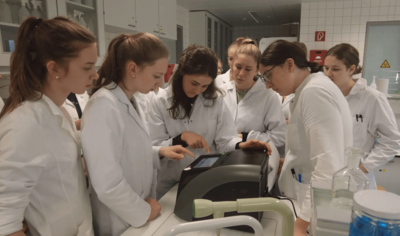
Microorganisms represent a major share of Earth’s biodiversity and constantly move between ecosystems. In agriculture and food production, they play a crucial role by contributing to food quality, fermentation, and spoilage. The Micro-Tramper project aims to understand microbial flows along the food production chain through close collaboration with five Austrian higher education institutions focusing on agriculture, nutrition, and food production. Students participating in the project collect samples from family-owned food production facilities, handmade cheeses at different ripening stages, their home refrigerators, and themselves. They extract DNA and use modern sequencing technologies, including portable MinION devices from Oxford Nanopore Technologies, to analyze microbial communities directly at their schools. Data analysis and interpretation are carried out together with university researchers. Beyond generating scientific data on microbial diversity, functional genes, and ripening processes, the project empowers students to evaluate hygiene practices, rethink food loss, and better understand responsible disinfection. Teachers are trained to independently run sequencing projects, ensuring long-term integration into school curricula. Through workshops and creative outreach activities, Micro-Tramper fosters microbiome literacy, scientific curiosity, and long-lasting networks between participating schools. This project is funded by the Federal Ministry of Education, Science and Research (BMBWF) within the Sparkling Science programme.

Micro-tramper

Sparkling Science


Finished Projects

MASTER

Microbiome Applications for Sustainable food systems through Technologies and EnteRprise

The overall aim of MASTER is to take a global approach to the development of concrete microbiome products, foods/feeds, services or processes with high commercial potential, which will benefit society through improving the quantity, quality and safety of food, across multiple food chains. For this project, we visit food-producing facilities, collect samples, do nucleic acid extraction for high-throughput sequencing and subsequent bioinformatics analysis and develop software and pipelines for the analysis of such data. This is the case for the already published TORMES pipeline of our postdoc Narciso Martin Quijada Website, that was initially developed in the “Instituto Tecnológico Agrario de Castilla y León” (Valladolid, Spain) in collaboration with the University of Burgos (UBU, Spain) and the “Hospital Universitario Río Hortega” (Valladolid, Spain). TORMES allows, with the use of very simple instructions, to perform the complete analysis of bacterial genomes obtained by whole genome sequencing directly from the raw sequencing data, with special focus on antimicrobial resistances. Website MASTER

Microbial population interactions in the cow’s rumen

Rumen microbial ecology has been intensively studied, from the pioneering cultivation efforts by Robert Hungate to the recent establishment of comprehensive metagenome-assembled genome (MAG) databases. However, this work has focused on the rumen content whereas the rumen epithelial wall, especially in terms of cultivation, has been comparatively neglected. Interestingly, multiple 16S rRNA amplicon datasets from the rumen epithelium have found a single ASV affiliated with the Campylobacteraeceae to be extremely dominant (1-30% relative abundance). Here, we collected metagenomes from epithelial samples, recovered 3 MAGs, and found that the 2 most abundant of these fall into a clade of Campylobacteraeceae distantly related to the classical Campylobacter pathogens (C. jejuni and C. coli). Fortunately, we were able to cultivate and sequence the genomes from >30 representatives and show that they represent two highly differentiated populations. By applying a reverse ecology approach, we have been testing hypotheses about how these two populations, and the gene flow units within them, map onto different ecological roles. Our hope is to provide a solid basis for understanding whether these microbes influence animal health.  Website COMET

The HDHL-INTIMIC - Healthy Diet for a Healthy Life - INtesTInal MICrobiomics

Knowledge Platform on Food, Diet, Intestinal Microbiomics and Human Health

HDHL-INTIMIC aims to coordinate national and regional programmes in the area of diet, intestinal microbiomics and health as well as nutrition and health in general, thereby contributing to the implementation of JPI HDHL (The Joint Programming Initiative - a Healthy Diet for a Healthy Life) objectives. In the programme, 26 countries from within and outside of Europe are working on a programmed approach to align national R&I strategies and to fund new research, in order to facilitate true understanding of the relationship between diet, physical activity and health. Website