- Home /
- University /
- Infoservice /
- Press Releases /
- International Women´s Day: Sonja Hartnack – A Pioneer for One Health
University
International Women´s Day: Sonja Hartnack – A Pioneer for One Health
Sonja Hartnack, the new Professor of One Health Systems Science at Vetmeduni, brings international experience and interdisciplinary expertise to advance the cross-cutting field of One Health at the university. Her focus is on exploring the complex connections between animal, environmental, and human health and developing sustainable solutions to global health challenges. With innovative approaches in research and teaching, she aims to establish One Health as a central component at Vetmeduni.
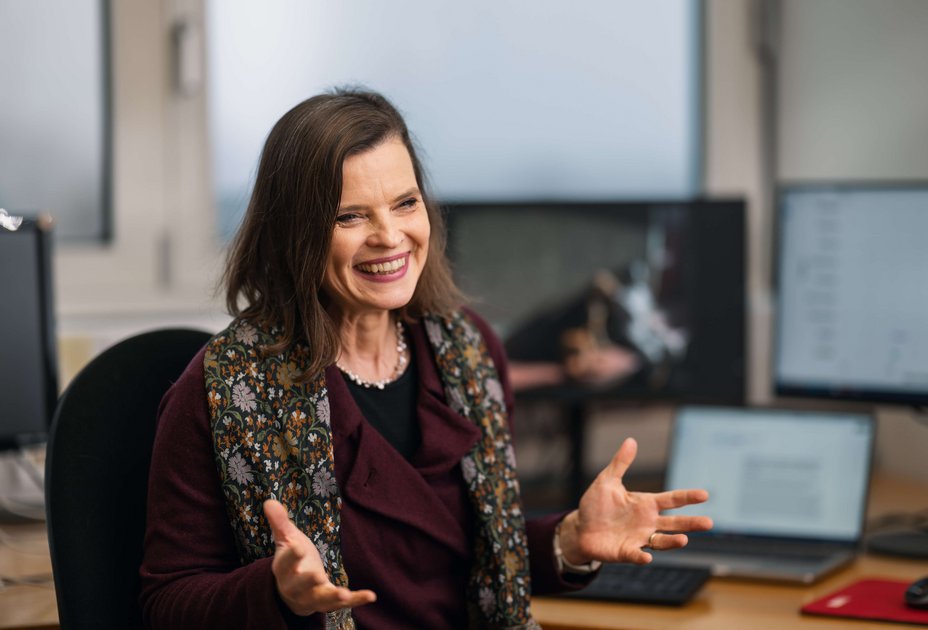
The veterinarian studied at the universities of Liège and Munich, where she earned her doctorate in 2002. After postdoctoral positions in Munich, Leipzig, and Bern, as well as an ECVPH residency in population medicine, she joined the University of Zurich in 2010. There, she habilitated in epidemiology in 2019 and obtained an MSc in biostatistics. In addition to her scientific expertise, she has completed training in higher education didactics and leadership. Sonja Hartnack's research focuses include the evaluation of diagnostic tests, the epidemiology of infectious diseases, and the intersections between animal, environmental, and human health.
From Uganda to Vienna: Global Perspectives for One Health
Since 2014, Hartnack has been actively involved in Uganda, where projects such as rabies surveillance have brought the perspectives of the Global South into applied epidemiology. She emphasizes that One Health is not an isolated approach but thrives on intensive collaboration and mutual learning. "The days when a problem could be tackled with a single solution are over," she says. With her professorship at the University of Veterinary Medicine Vienna, she aims to promote "systems thinking" to holistically address complex problems and develop sustainable solutions. Her research in Uganda highlights the importance of considering local conditions and perspectives to develop effective approaches to combating animal diseases. For example, she discovered that cultural and economic factors influence the willingness to vaccinate against rabies - an aspect often overlooked in the Global North.
Education for the Future: One Health in Focus
At Vetmeduni, Sonja Hartnack sees great potential to anchor One Health as a central component in research and teaching. To integrate the cross-cutting field of One Health into the new curriculum, she plans to develop innovative teaching formats that promote both factual knowledge and critical thinking. These formats will also focus on essential 21st-century skills such as creativity, collaboration, and communication, including communication with other scientific disciplines, to optimally prepare students for the challenges of a connected world.
As a passionate educator and networker, she aims to foster exchange between the Global North and South and provide Vetmeduni students with opportunities to learn from other perspectives. She plans to leverage her strong connections with Makerere University in Kampala to strengthen collaborations in research and education.
Practical Training and International Networking
In addition to integrating One Health into teaching, Sonja Hartnack is committed to expanding practical training at Vetmeduni. She plans to establish an ECVPH residency program that will position the university as a training center for residents of the European College of Veterinary Public Health. In collaboration with AGES, Vetmeduni aims to play a central role in promoting veterinary public health and One Health in Central Europe. This program will not only enhance the university's scientific expertise but also strengthen international networking and interdisciplinary exchange.
With her international experience, dedication to interdisciplinary collaboration, and passion for sustainable solutions, Sonja Hartnack is a driving force for the advancement of One Health at Vetmeduni. Her work inspires hope that, in the face of the major challenges of a connected world, we can find ways to benefit humans, animals, and the environment together.
Talk with Sonja Hartnack
What personally inspired you to advocate for the One Health approach?
Hartnack: In my family, there are veterinarians and human doctors, and my father was a forester, so I learned early on to view health from different perspectives. During my veterinary studies, I realized that the health of humans, animals, and the environment is often seen in isolation. This sparked my desire to overcome these boundaries.
What motivated you in 2025 to move from Switzerland to Austria and join Vetmeduni?
Hartnack: The professorship in One Health Systems Science gives me the opportunity to build something new, work with great colleagues, be part of an internationally recognized university - and yes, Vienna is, of course, a bonus.
What do you see as the biggest challenge for the One Health approach in research?
Hartnack: For me, the biggest challenge in the One Health approach is inter- and transdisciplinary communication. Structures and funding mechanisms are often still strongly focused on individual disciplines, and differing terminologies, sectors, or data formats complicate the exchange.
Which experiences from your work in Uganda have particularly shaped your view of global health issues?
Hartnack: In Uganda, I heard about a use of antibiotics I hadn’t considered myself: adding them to milk to extend its shelf life. This experience clearly showed me how important it is to understand the local context and actively collaborate with stakeholders on-site when addressing global health issues.
How do you incorporate your international experience into your work at Vetmeduni?
Hartnack: With a PhD student from Nepal and a PhD student from Turkey who came with me to Vienna, our projects continue, and at the very internationally oriented Center for Public Veterinary Medicine and One Health, we benefit from lively exchange.
What does "critical thinking" mean to you in the education of students?
Hartnack: For me, it means recognizing connections and making informed decisions. Critical thinking is a central component of 21st-century skills - alongside creativity, collaboration, and communication.
How do you balance your career at Vetmeduni with your family life? Do you have tips for other working mothers in science?
Hartnack: A great partner, good friends, a bit of organization - and humor is essential!
What activities do you enjoy with (or without) your family in your free time?
Hartnack: Museums, theater - and evenings with pizza in the garden with family and friends.