- Home /
- University /
- Infoservice /
- News /
- Vetmeduni: Millions in Funding for Groundbreaking Research
Research
Vetmeduni: Millions in Funding for Groundbreaking Research
The University of Veterinary Medicine Vienna (Vetmeduni) is celebrating a major success: As part of the Austrian Science Fund (FWF) excellence initiative excellent=austria, two revolutionary research projects at Vetmeduni have been awarded a total of over 11 million euro in funding. The projects, led by Alice Auersperg and Florian Grebien, are among the six selected Emerging Fields consortia. Both initiatives have the potential to bring about paradigm shifts in their respective fields and enable groundbreaking advancements.

Ribosomes and Cancer: A Hidden Code
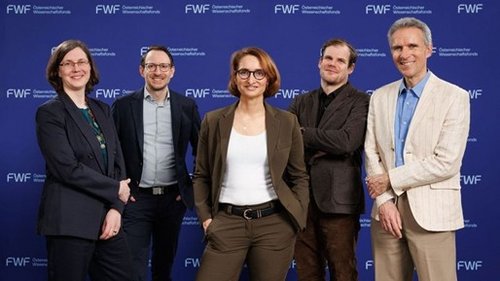
The project "Pediatric Cancers and Their Ribosome Code," involving Florian Grebien—Professor at Vetmeduni and research group leader at St. Anna Children's Cancer Research Institute and the CeMM Research Center for Molecular Medicine—examines the role of ribosomes as regulators of protein synthesis, an underexplored layer of gene regulation. The aim is to decode the "ribosome code" that cancer cells exploit for growth and therapy resistance. Despite advances in cancer treatment, many children with cancer still face challenges such as limited therapeutic options and severe side effects. With nearly 6 million euro in funding, the project seeks to develop new approaches for more effective and safer therapies while fundamentally expanding our understanding of protein production.
"Given the growing recognition of ribosomes as an underexplored layer of gene regulation in pediatric cancers, our interdisciplinary team combines extensive expertise in mechanistic biology with innovative research in pediatric oncology."
Florian Grebien
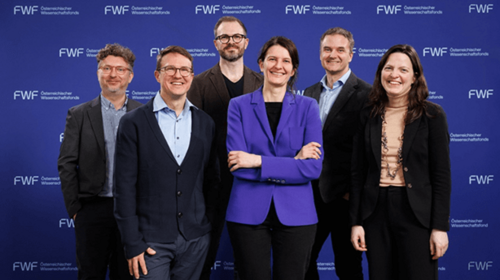
Interview with Alice Auersperg and Florian Grebien
What does the funding from the "Emerging Fields" program mean for your research, and what opportunities does it open up for you?
Auersperg: The funding allows us to systematically investigate one of the most exciting open questions in behavioral biology: How do inventions actually arise? We know that some animals can be remarkably innovative. Cockatoos, for example, fashion feeding tools from wood, crows place nuts on tram tracks to crack them, and chimpanzees use stones as hammers and anvils. However, the processes leading to such innovations are still poorly understood. With this project, we can study these origin stories in detail—not just the successful solutions but also the many attempts, missteps, and learning processes that ultimately lead to inventions.
Grebien: This funding enables us to tackle a highly interesting and underexplored question in the coming years. Ribosomes are highly complex molecular machines, and it has long been known that they are indispensable for protein synthesis in all cells. It is therefore surprising how little is known about the regulatory mechanisms of their activity. In the next few years, we will use high-resolution technologies to study the composition and regulatory mechanisms of ribosomes in detail.
Mrs. Auersperg, your project focuses on innovation in the animal kingdom and its transferability to robotic systems. What insights do you expect, and how could they revolutionize robotics?
Auersperg: Animals are astonishingly good problem-solvers in complex environments. When faced with a new problem, they can respond flexibly and develop new solutions. Achieving this level of flexibility is still a significant challenge in robotics. We aim to understand the factors that enable such creative solutions. Physical structure, environmental conditions, experience, and predisposition all play central roles. For instance, a parrot manipulates objects in a completely different way than a great ape, and these differences shape the types of solutions that emerge. By systematically analyzing these processes, we hope to derive principles that could make robots more adaptable in their environments. The idea is to learn from animals how flexible problem-solving arises, rather than simply copying their behavior.
Mr. Grebien, your project investigates the "ribosome code" in pediatric cancers. What makes this approach so unique, and how could it revolutionize cancer research?
Grebien: This project uniquely combines cancer research, structural biology, and biochemistry, potentially leading to significant breakthroughs in all three disciplines. On one hand, we will gain new insights into the molecular mechanisms of protein synthesis. On the other hand, we hope to develop new therapeutic approaches for treating pediatric cancers, which is of immense medical importance.
What challenges do you foresee in implementing your projects, and how do you address the risks associated with exploring new approaches?
Auersperg: Comparing innovations across different species is inherently challenging because tests must be adapted fairly to different physical structures and predispositions. That’s why we are developing new experimental setups that allow us to deliberately trigger and observe innovation processes over extended periods. Another challenge is the strong interdisciplinarity of the project. We are combining comparative cognition research with robotics and theoretical modeling. This is demanding but also offers great opportunities by bringing together diverse perspectives.
Grebien: Many aspects of the project rely on modern molecular technologies that generate large datasets. A key challenge will be to analyze and integrate these datasets innovatively to gain new insights. Additionally, the medical focus must not be lost: What new therapeutic approaches can be realized, and which patient groups could benefit? Thanks to the unique composition of the consortium, we are confident that we can overcome these challenges together.