- Home /
- University /
- Infoservice /
- Press Releases /
- 4th Mallnitz Days: Birds of Prey Conservation Between Research and Practice
University
4th Mallnitz Days: Birds of Prey Conservation Between Research and Practice
Four decades after the successful reintroduction of the bearded vulture in the Hohe Tauern National Park, the 4th Mallnitz Days on March 20 focused on current challenges in alpine birds of prey conservation. Under the theme "Birds of Prey Between Research and Practice," experts from science, conservation, and wildlife management discussed the latest findings, practical experiences, and future strategies.
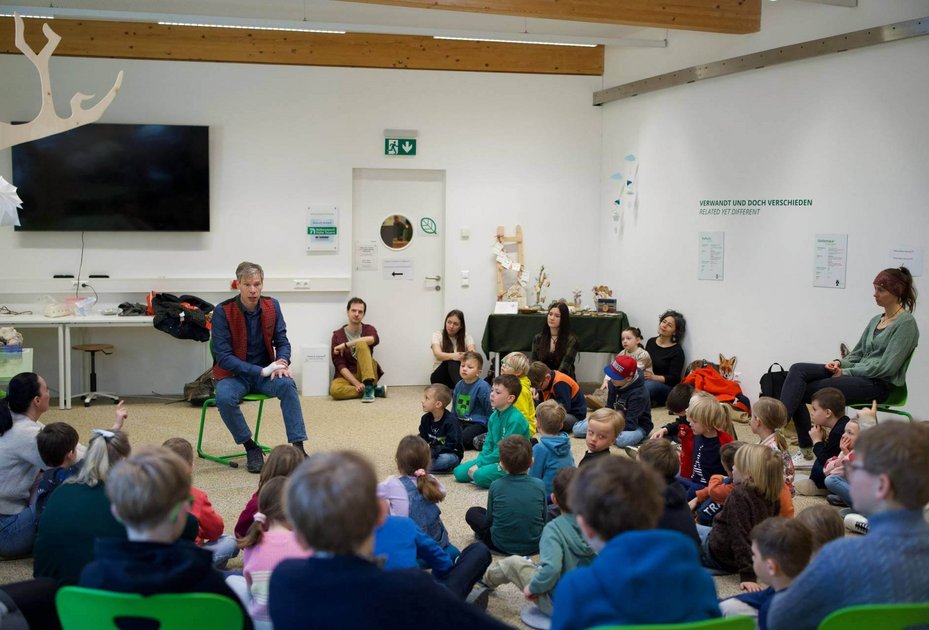
The conference centered on monitoring programs, wildlife pathology, specific conservation measures, and addressing illegal impacts on endangered species. It became clear that successful birds of prey conservation requires close integration of research, management, and regional stakeholders.
The event was initiated in 2019 as a joint effort by the University of Veterinary Medicine Vienna (Vetmeduni), the state of Carinthia, and the Hohe Tauern National Park. This close collaboration between science, public authorities, and protected area management remains the foundation of the event to this day.
The Mallnitz Days have since established themselves as a significant professional platform for exchange between research and practice in the alpine region. They strengthen institutional cooperation, promote interdisciplinary dialogue, and provide concrete impulses for nature and species conservation in the Alps.
40 Years of Bearded Vulture Release: A Look Back at the Success Story in Hohe Tauern National Park
"The first release of bearded vultures, which took place in 1986 in the Rauris Krumltal, was a major milestone that required years of intensive preparation," emphasized Hans Frey (Owl and Birds of Prey Station Haringsee) in his opening lecture. "That this project would develop so positively and that the bearded vulture population in the Alps today includes so many individuals and breeding pairs was our hope—but we would not have dared to dream of it. All the more important is it to continue monitoring the situation closely to ensure that bearded vultures can live undisturbed in the Alps in the future," he concluded.
Monitoring for Long-Term Success
In a specialized lecture, Michael Knollseisen, a bearded vulture expert from Mörtschach, provided fascinating insights into the methodology of annual nest monitoring. He explained how breeding sites are systematically recorded, monitored, and documented to ensure the reproductive success of this rare bird of prey species in the long term. Additionally, he discussed the practice of marking released birds: these are equipped with individually recognizable wing color markings and transmitters. This allows for the clear identification of individual birds, tracking their movements, and gathering important data on survival rates, spatial behavior, and reproduction. These measures are central to monitoring and ensuring the long-term success of the reintroduction project, Knollseisen summarized.
Matthias Lehnert (Project Manager "Birds of Prey" at Hohe Tauern National Park) presented the results of bearded vulture monitoring conducted in the park from 1986 to 2025. His lecture focused on the long-term population development and the establishment of breeding pairs in the Hohe Tauern. He illustrated how the population has evolved since the initial reintroduction projects and what territorial structures have emerged.
Conservation Measures and Success Monitoring for Threatened Birds of Prey and Owl Species
"Continuous conservation measures and targeted monitoring are crucial for the positive development of rare birds of prey, falcons, and owl species. They enable reliable tracking of reproductive success while also identifying negative changes early. Only on this basis can timely countermeasures be implemented to ensure the long-term positive development trend of these remarkable species," summarized Richard Zink (Austrian Ornithological Institute, Konrad Lorenz Institute of Ethology, Vetmeduni) during his lecture.
Fascinating Insights into Wildlife Pathology
Niklas Vesely (Research Institute of Wildlife Ecology, Vetmeduni) emphasized that wild animals cannot afford to openly display symptoms of illness. Even when abnormalities become visible, reliable diagnoses are often impossible from a distance. To gain well-founded insights into the health status of wild populations, close collaboration between hunters and national parks is essential. Through targeted, sample-based health examinations, current disease occurrences can be recorded and better understood.
Lifestyle and Threat Scenarios for Native Birds of Prey
For Gerald Muralt of the Carinthian Hunters' Association, birds of prey are among the most fascinating inhabitants of our landscape and play a central role in the natural balance. His lecture provided a compact overview of native birds of prey species, their lifestyles, and current threats. He also explored the role of hunting in their conservation and preservation. A particular focus was placed on falconry, its long tradition, and its modern significance for responsible and sustainable interaction with birds of prey.
wildLIFEcrime: An Interdisciplinary Project Against Illegal Persecution
Johannes Hohenegger from BirdLife Austria used the Mallnitz Days to present the cross-border LIFE project against wildlife crime. In his lecture, he explained how illegal persecution can be detected and how interdisciplinary collaboration supports law enforcement.
Pollutant Exposure and (Lead) Poisoning of Birds of Prey
The exposure of birds of prey to pollutants remains concerning, summarized Oliver Krone (Leibniz Institute for Zoo and Wildlife Research): "It is incomprehensible that the use of lead-based ammunition has still not been consistently restricted—especially since equivalent, non-toxic alternatives are readily available," the expert emphasized.
Sustainability, Exchange, and Involvement of the Next Generation
Martina Marchetti-Deschmann, Vice Rector for Research, International Affairs, and Sustainability at Vetmeduni, highlighted the importance of the exchange format: "The Mallnitz Days repeatedly demonstrate that the interplay between university wildlife research and practical wildlife management is a win for all involved—especially for the wildlife in Hohe Tauern National Park. This is environmental protection in action; this is OneHealth in action."
National Park Director Barbara Pucker also emphasized the importance of networking and exchange: "As a national park, we bear responsibility for protecting sensitive species and habitats. The Mallnitz Days are a central platform for directly transferring scientific findings into practice and jointly developing sustainable solutions," she concluded.
Johanna Painer-Gigler (Research Institute of Wildlife Ecology, Vetmeduni): "What made this conference special was the space created for our young audience, with elementary school students from Mallnitz also attending. Introducing children to areas of wildlife medicine and ecology is always a special joy and makes an important contribution to imparting scientific knowledge and fostering openness toward conservation."


