- Home /
- University /
- Infoservice /
- Press Releases /
- The Forster-Steinberg Foundation recognizes projects in the field of animal protection and animal welfare
University
The Forster-Steinberg Foundation recognizes projects in the field of animal protection and animal welfare
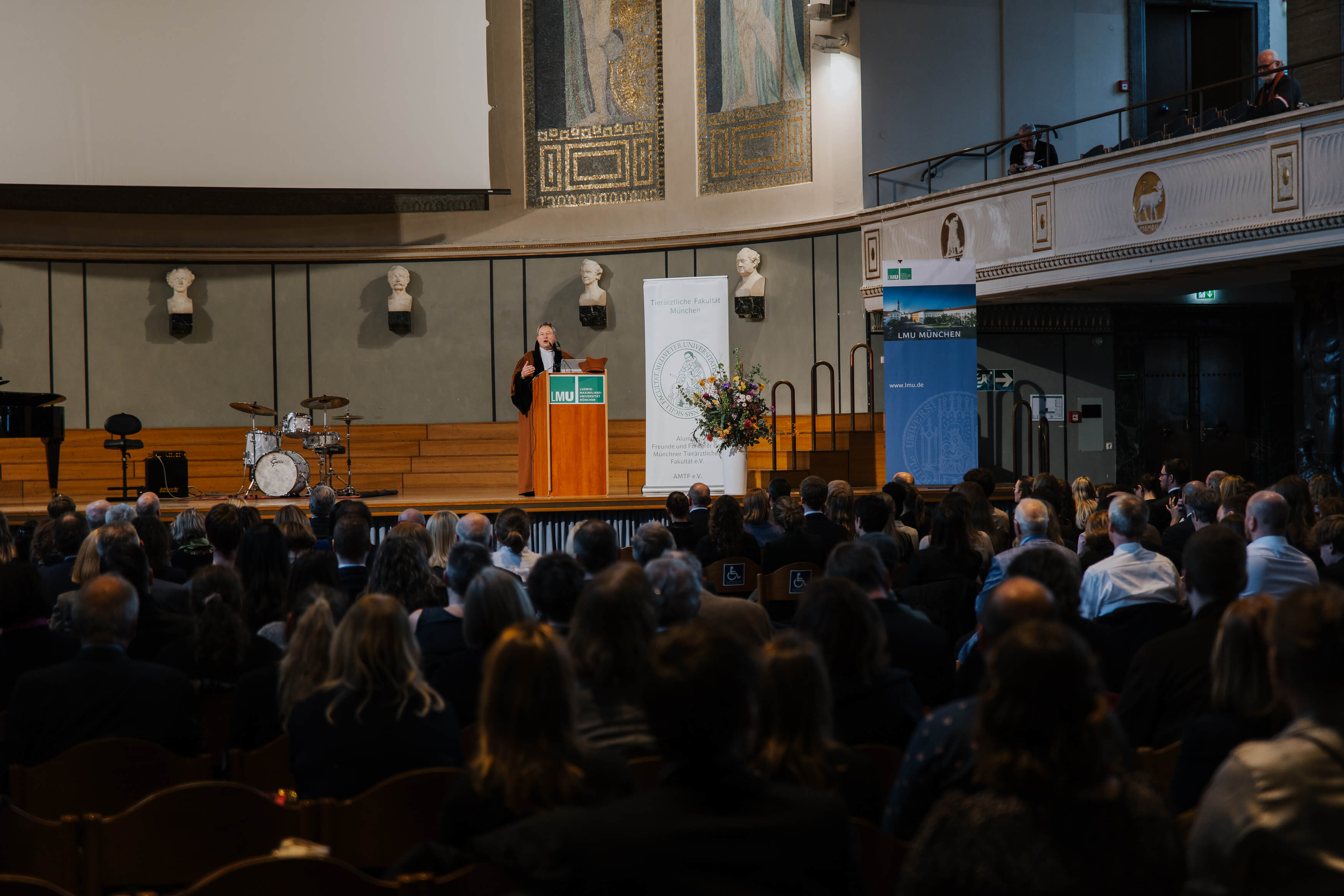
On February 7, 2026, at Ludwig Maximilian University of Munich, the Forster-Steinberg Foundation honored outstanding achievements in the field of animal welfare and animal protection.
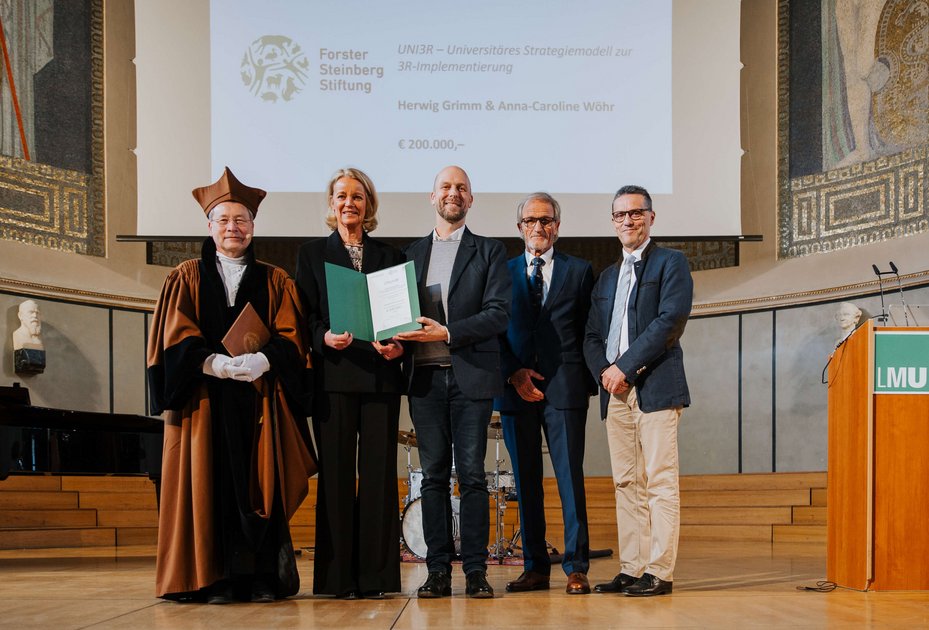
Founded in 2019, the Forster-Steinberg Foundation advances animal protection by funding projects and supports both university-based science and research as well as nonprofit initiatives that promote animal welfare and animal protection. Every two years, the foundation awards prizes for academic theses, special achievements in animal protection, and a research prize committed to the ethical 3R principle (Replacement, Reduction, Refinement).
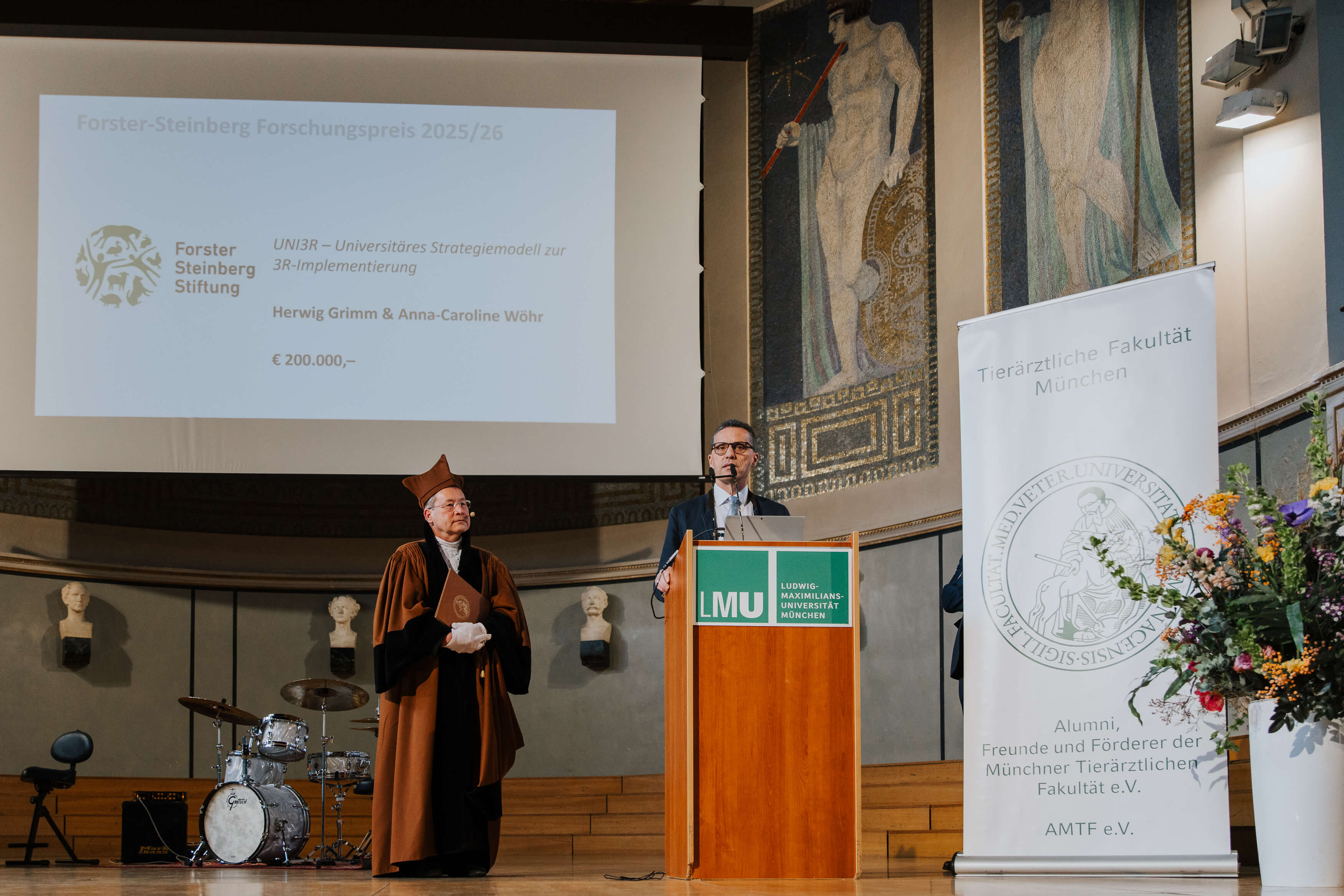
In 2025/26, prizes totaling over 300,000 euros will be awarded within the spheres of the University of Veterinary Medicine Vienna (Vetmeduni) and Ludwig Maximilian University of Munich (LMU). With these awards, the foundation recognizes the significant contributions of the prizewinners to the protection and well-being of animals and underscores its long-standing commitment to research and education in veterinary medicine and animal protection. Among those attending the formal award ceremony were Matthias Gauly, Rector of Vetmeduni, and Reinhard Straubinger, Dean of the Faculty of Veterinary Medicine at LMU.
The following awardees were honored:
Awardees – Research Prize
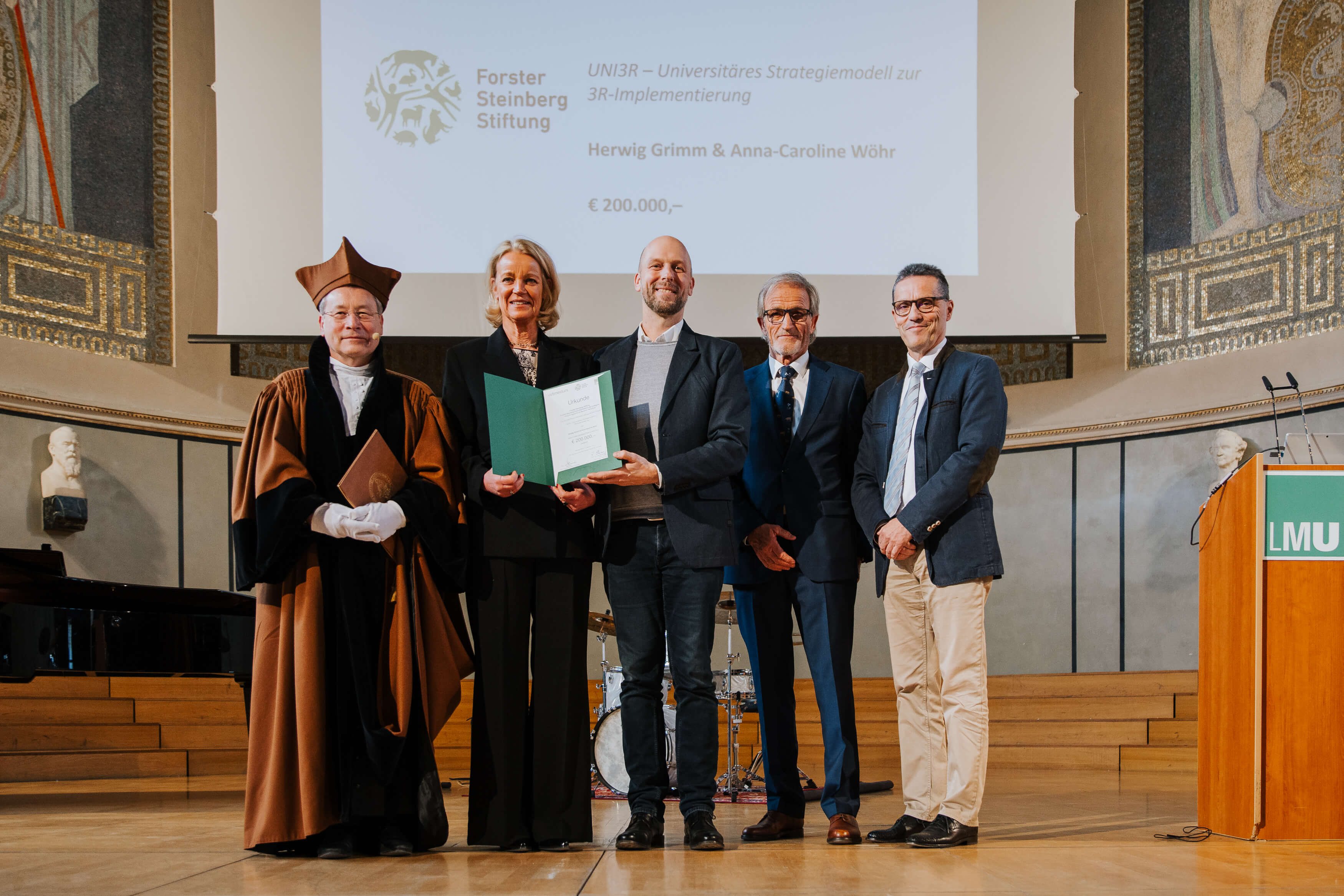
Herwig Grimm (Vetmeduni), Anna-Caroline Wöhr (LMU), Helen Louton (LMU), and Kerstin Auer (Vetmeduni) – UNI3R – A university strategy model for 3R implementation
Awardees – Student Prizes
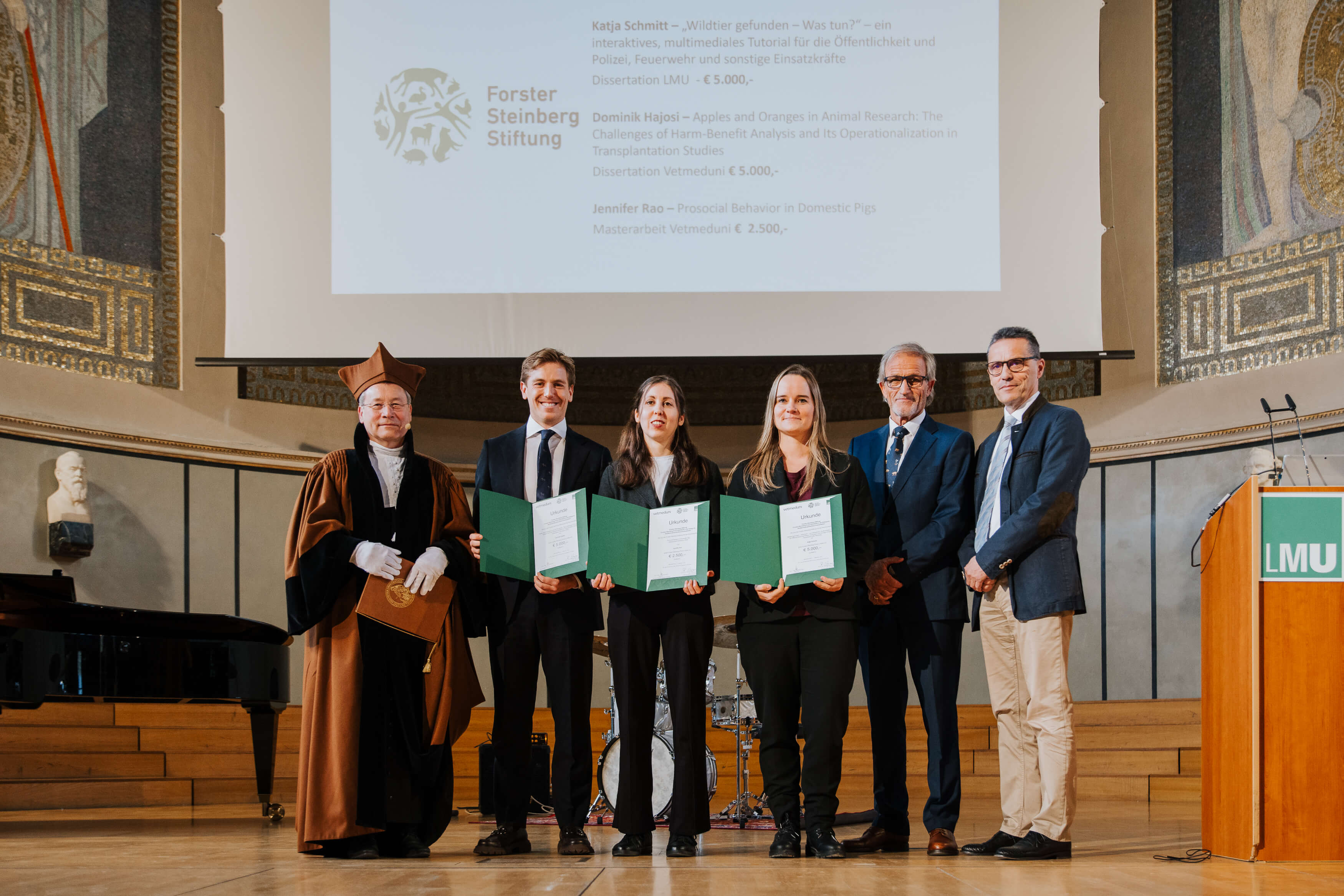
Katja Schmitt – “Found a wild animal – what to do?” – an interactive, multimedia tutorial for the general public and for police, fire brigade, and other emergency services; PhD thesis, LMU
Dominik Hajosi – Apples and Oranges in Animal Research: The Challenges of Harm-Benefit Analysis and Its Operationalization in Transplantation Studies; PhD thesis, Vetmeduni
Jennifer Rao – Prosocial Behavior in Domestic Pigs; Master’s thesis, Vetmeduni
Awardees – Animal Protection Prizes (Organizations/Projects)
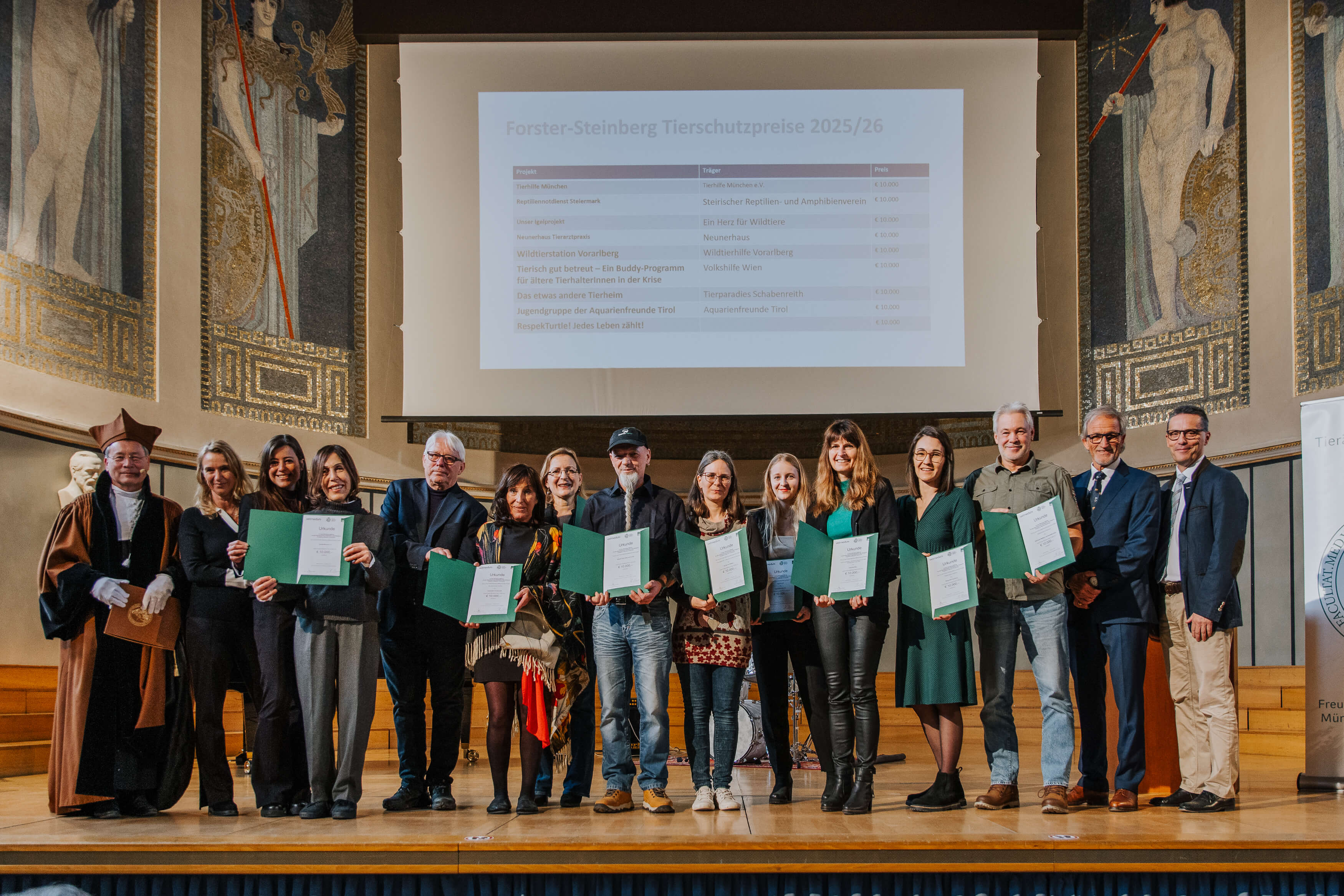
1. Tierhilfe München (Germany)
2. Styrian Reptile and Amphibian Association, Reptile Emergency Service Styria
3. Ein Herz für Wildtiere (A Heart for Wildlife), “Our Hedgehog Project – Animal protection with heart and education”
4. neunerhaus, neunerhaus veterinary practice
5. Wildtierhilfe Vorarlberg, Wildlife Station Vorarlberg
6. Volkshilfe Wien, “Tierisch gut betreut – A buddy program for older pet owners in crisis”
7. Tierparadies Das etwas andere Tierheim Schabenreith
8. Aquarienfreunde Tirol, Youth Group of the Aquarienfreunde Tirol
9. RespekTurtle! Every Life Counts!
For more information about the Forster-Steinberg Foundation and its activities, please visit the website.
Press contact:
Renate Vedovelli
+43 1 25077 1013
renate.vedovelli@vetmeduni.ac.at
Forster-Steinberg Research Prize 2025/26
- Herwig Grimm (Vetmeduni), Anna-Caroline Wöhr (LMU), Helen Louton (LMU), and Kerstin Auer (Vetmeduni) – UNI3R – A university strategy model for implementing the 3Rs
The 3R principles (Replacement, Reduction, Refinement) are well known in scientific practice and enshrined in law, but need to be further implemented in research and teaching. Establishing the 3Rs in a sustainable and effective manner is only possible through systematic strategies.
The goal of the project is to develop and implement a strategic 3R management system at the Faculty of Veterinary Medicine at Ludwig Maximilian University of Munich (LMU) and at the University of Veterinary Medicine Vienna (Vetmeduni). Instead of selective measures, the project pursues an integrated concept that embeds the 3Rs structurally into teaching, scientific culture, and decision-making processes.
Forster-Steinberg Prize 2025/26 – Academic Theses
- “Found a wild animal – what to do?” – an interactive, multimedia tutorial for the general public and police, fire brigade, and other emergency responders – Katja Schmitt, PhD thesis, LMU
Under the motto “Knowledge saves lives! Education is the first step toward wildlife aid,” the tutorial targets the general public, first responders such as police and fire services, and veterinary students. It provides practical knowledge on correctly assessing whether wild animals need help, first aid measures, and the complex interconnections among animals, humans, and nature. The resource makes a valuable didactic contribution to reducing unnecessary removal of wild animals from nature, minimizing animal suffering, and promoting the sustainable protection of native wildlife and their habitats.
Note: The interactive e-learning tutorial was developed in cooperation with Wildtierhilfe Bayern e.V. Supervision: Rüdiger Korbel and Julia Gräfin Maltzan/LMU Munich.
- “Apples and Oranges in Animal Research: The Challenges of Harm-Benefit Analysis and Its Operationalization in Transplantation Studies” – Dominik Hajosi, PhD thesis, Vetmeduni
Harm-benefit analysis (HBA) is an important ethical and regulatory requirement mandated by EU Directive 2010/63/EU—the legal framework governing the use of animals for scientific purposes in the Member States. Despite the legal requirement to conduct HBA, there has so far been little concrete guidance for its practical implementation. This creates uncertainties for applicants and review bodies and hampers transparent and consistent decision-making.
This dissertation examines the current state of HBA implementation in European countries and the challenges encountered in practice. Based on this, it proposes a new HBA methodology aligned with existing guidance frameworks and provides an operational tool that consistently incorporates the 3R principles (Replacement, Reduction, Refinement) and regulatory requirements. In this way, animal welfare is safeguarded and consistency in ethical review is strengthened.
- “Prosocial Behavior in Domestic Pigs” – Jennifer Rao, Master’s thesis, Vetmeduni
In her master’s thesis, Jennifer Rao investigated so-called consolation behavior in domestic pigs. The aim was to determine whether pigs respond to a group member’s stress with affiliative, i.e., friendly social contact, and whether the intensity of such contact depends on the level of stress experienced. In a controlled study with 120 pigs across 12 groups, animals were temporarily separated from their group. After returning, the conspecifics’ social reactions were recorded on video, and affiliative behaviors such as nose contact were systematically evaluated. In addition, saliva samples were analyzed to determine the stress hormone cortisol. The results show that separated animals received significantly more affiliative contact after their return than under a control condition without separation. The work thus provides initial evidence of consolation-like behavior in pigs and underscores the importance of stable social structures for animal welfare in agricultural practice.
Forster-Steinberg Prize 2025 – Animal Protection Projects
- Tierhilfe München e.V. is a nonprofit, purely volunteer-run animal protection association in Munich that operates a 24/7 emergency phone line for animals in need. It facilitates sustainable adoptions of dogs and cats and provides loving foster care. Through public education on current animal protection issues such as illegal puppy trade, cruel and hobby breeding, pigeon and chicken protection, as well as prevention work in schools, it strengthens awareness of sustainable, future-oriented animal protection.
- Reptile Emergency Service Styria: Awarded for organizing a state-wide reptile emergency service by the Styrian Reptile and Amphibian Association, dedicated to identifying, capturing, and securing exotic and native reptiles and amphibians in distress. In every district of Styria, at least one specialist is on call 24/7. In cooperation with authorities such as police stations, official veterinarians, and state warning centers, free-of-charge temporary housing is arranged. Injured or ill animals are taken to a veterinarian, and permanent placements are sought domestically and abroad for abandoned or confiscated animals.
- Our Hedgehog Project – Animal protection with heart and education: Awarded to the hedgehog project by the association Ein Herz für Wildtiere, which in the past two years has reached over 6,000 children and adolescents in Vienna, Lower Austria, and Burgenland—from kindergarten to middle school. In age-appropriate workshops, children learn in a playful way how to protect hedgehogs in everyday life: by creating hedgehog-friendly gardens, responding appropriately when finding an animal, and interacting respectfully with wildlife. In addition to educational work, the association is intensively involved in the care and rehabilitation of injured, orphaned, and vulnerable wild animals. Over 1,000 animals are taken in, cared for, and—where possible—released back into the wild each year. The project combines animal protection with environmental education and promotes empathy, responsibility, and respect—values that go far beyond nature conservation.
- neunerhaus veterinary practice in Vienna/Margareten: Awarded for the work of around 40 volunteer veterinarians and assistants who provide medical care and support for species-appropriate animal husbandry for the pets of homeless and vulnerably housed people in Vienna. Many such individuals have animals—often their only, sometimes their last, loyal companions. Especially in times of crisis, animals provide support, stability, and a sense of responsibility: those who care well for their animals often relearn to take care of themselves. Trust can be built through the animal. This way, people can also be reached and gain access to the neunerhaus health center and low-threshold social services.
- Wildlife Station Vorarlberg: Awarded for a project to establish a wildlife rescue and rehabilitation center in Vorarlberg. Originating from a volunteer initiative, the station is being developed into a professional, central hub for wild animals in distress. It fills a previously existing care gap and coordinates proper care for injured and orphaned wild animals to enable their successful return to nature. At the same time, the wildlife station supports the public through counseling and education, relieves authorities and veterinarians, and creates stable long-term structures for regional wildlife protection. The project pools volunteer engagement, professional expertise, and partnerships, thereby making a sustainable contribution to biodiversity protection in Vorarlberg. The focus is primarily on non-game species such as hedgehogs, bats, squirrels, and various bird species.
- “Tierisch gut betreut – A buddy program for older pet owners in crisis”: Awarded to a preventive program by Volkshilfe Wien that connects older adults affected by poverty and limited mobility with trained local volunteers (“buddies”) during challenging times. Trained buddies support or take over the care of animals when owners, for example during a hospital stay, cannot look after them. The project understands animal protection in line with the One Health approach: the well-being of humans and animals is inextricably linked. Healthy, well-cared-for pets contribute to the psychological stability, social participation, and quality of life of older people. Conversely, animals benefit from socially supported owners who, with the help of buddies, can ensure species-appropriate, stable care. A particular strength of the “Urli, Burli & Schnurli” program is its scientific support: in cooperation with the Assistance Dogs Testing and Coordination Center at the Messerli Research Institute (Vetmeduni) and the University of Klagenfurt, effectiveness is continuously reviewed and further developed using expert knowledge—ensuring help reaches those who need it most. Additionally encouraging: With this program, the Assistance Dogs Testing and Coordination Center won the charity voting at the 2026 Immobilienball.
- The Different Kind of Animal Shelter: Out of love for animals and nature, Doris and Harald Hofner founded the Tierparadies Schabenreith in Steinbach am Ziehberg in the 1990s. Once a farm, it is now a unique refuge for around 500 animals- a government-recognized animal shelter, wildlife rescue station, and animal rescue organization with heart. Here, abused, injured, and abandoned animals find protection, medical care, and a loving home. On nine hectares of land, surrounded by unspoiled nature, dogs, cats, foxes, roe deer, red deer, birds, and many other animals live in species-appropriate, carefully designed areas. The Tierparadies stands for empathy, respect, and responsibility - sustained by a dedicated team that is there for its charges around the clock.
- Youth Group of the Aquarienfreunde Tirol: Awarded for the unique volunteer educational project “Youth Group of the Aquarienfreunde Tirol,” which teaches children and adolescents respectful treatment of animals and fosters enthusiasm for aquaristics, biodiversity, and environmental protection. Since its founding in 2012, children and adolescents aged six to sixteen have learned in a playful way what species-appropriate husbandry and species conservation mean and have put this knowledge into practice in their own aquariums. The youth group, led by Julia Perktold, currently includes 30 children aged 6 to 16. Through current media cooperation and social media presence, the group’s animal protection work has broad impact, achieving societal relevance beyond club activities.
- RespekTurtle! Every Life Counts!: Awarded to Austria’s only sanctuary for turtles, operated for over 10 years by chairman Markus Putzgruber. Currently, over 900 turtles (more than 50 different species), 40 parrots, budgerigars, a bearded dragon, degus, and tarantulas live on the 2,300 m² grounds in Seebarn am Wagram (Lower Austria). Many turtles are kept, fed, and overwintered incorrectly. Deformations and rickets are commonplace among the animals taken in by the sanctuary. To ensure the animals a good, long life and to raise awareness that some of these animals can live over 100 years, the association conducts educational outreach and offers guided tours with information on turtle husbandry.