- Home /
- University /
- Infoservice /
- Press Releases /
- Egg pecking with added value: focus on dual-purpose hens
University
Egg pecking with added value: focus on dual-purpose hens
Easter without eggs? Unthinkable! But what about the health of the hens that lay them? In the "Healthy sternum "* project, researchers at the Vetmeduni are investigating why laying hens often suffer from sternum damage and which factors influence their bone health. The focus is on dual-purpose chickens: these animals combine laying performance and meat production and could represent a promising alternative for greater animal welfare and more sustainable agriculture.
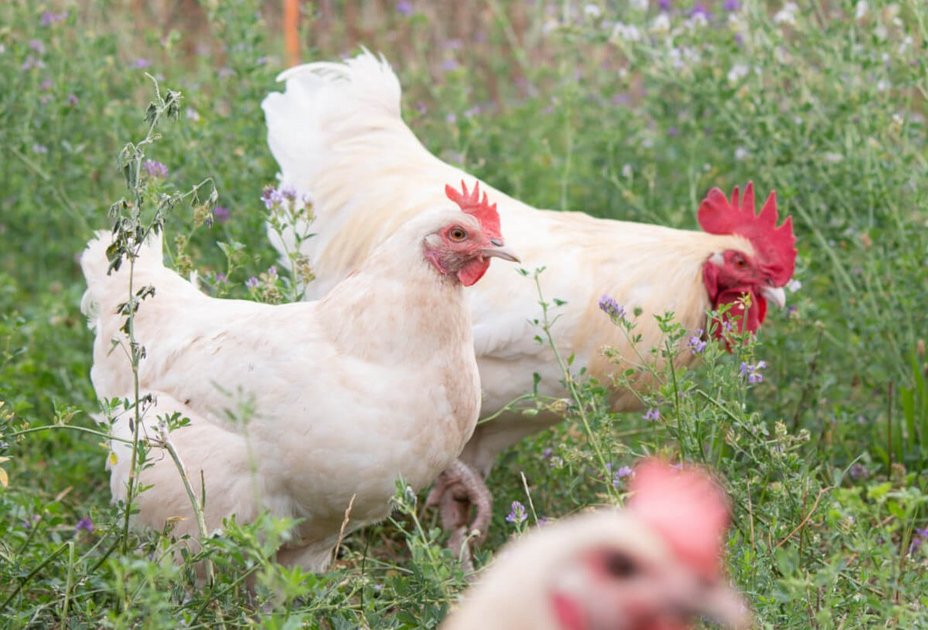
"Pecking eggs is simply part of Easter. But this year I like to lose out - because my egg comes from a dual-purpose hen," says Patrick Birkl from the Centre for Animal Nutrition and Animal Welfare Sciences at Vetmeduni. "These eggs often have a slightly softer shell and are also a little smaller than those from specialised laying hybrids. They therefore often lose out in the traditional test of strength. For me, however, this is not a disadvantage, but a conscious sign of a different approach to poultry farming."
Dual-purpose chicken concept
Dual-purpose chickens stand for greater animal welfare and more sustainable farming. They combine laying performance and meat production in a balanced way and avoid many of the problems of one-sided high-performance breeding. "The amounts of calcium required for shell formation can put a lot of strain on bone metabolism," explains Patrick Birkl. Repeated calcium release from the bone is being discussed as a key mechanism that can contribute to bone loss, osteoporosis and fracture risk in laying hens.
Research for greater animal welfare
The "Healthy breastbone" project, which Birkl is leading on behalf of her colleague Janja Sirovnik during her parental leave, is investigating precisely this problem. Around 100 laying hen farms are currently being visited in order to examine the animals using an X-ray machine. The literature shows that laying hybrids - regardless of how they are kept - have a high prevalence of sternum fractures, and initial results from the project also show this trend for Austrian farms. "Laying performance is not the only factor that influences bone health," says Birkl, "the age of the animals, the housing system, feeding, genetics and stress in the flock also play a role. That's why we speak of sternum damage as a multifactorial problem."
Diversity in dual-purpose: from White Rock to Bresse Gauloise
Dual-purpose chickens could be an alternative, especially for extensive husbandry systems. They are more robust, have a longer lifespan and are better adapted to the husbandry conditions that prevail in organic production in particular. They also enable holistic management: from the egg to the hen to the rooster. "Dual-purpose breeds also have a significant advantage: male chicks from laying hens no longer have to be killed, but can be fattened sensibly," emphasises Patrick Birkl. "So if I lose at egg pecking this year, I still win: a bit more animal welfare, sustainability and responsibility in our agriculture."
Various breeds are particularly suitable for dual-purpose use, including White Rock, New Hampshire, Sussex, Amrock, Australorps and Bresse Gauloise. In addition to the pure breeds, there are also commercial crosses where, for example, the dam is White Rock and the sire is New Hampshire. These crosses, which have evocative names such as Coffee, Cream or Chilli, combine the best characteristics of their parent lines and stand for a balanced combination of laying performance and meat production. While these sustainable and animal-friendly breeds are becoming increasingly established in Germany - especially in the organic sector - they have hardly been widespread in Austria to date. In order to change this, the practical suitability and important animal welfare aspects, such as the occurrence of sternum damage in these alternative breeds, are to be investigated in more detail in future.
*The "Healthy sternum" project is funded by the Federal Ministry of Agriculture, Forestry, Climate and Environmental Protection, Regions and Water Management (BMLUK).
Enquiry contact:
Patrick Birkl PhD.
Centre for Animal Nutrition and Animal Welfare Sciences
University of Veterinary Medicine, Vienna (Vetmeduni)
Patrick.Birkl@vetmeduni.ac.at