- Home /
- University /
- Infoservice /
- Press Releases /
- RNA Modifications Stabilize Ribosomes at Extreme Temperatures*
Research
RNA Modifications Stabilize Ribosomes at Extreme Temperatures*
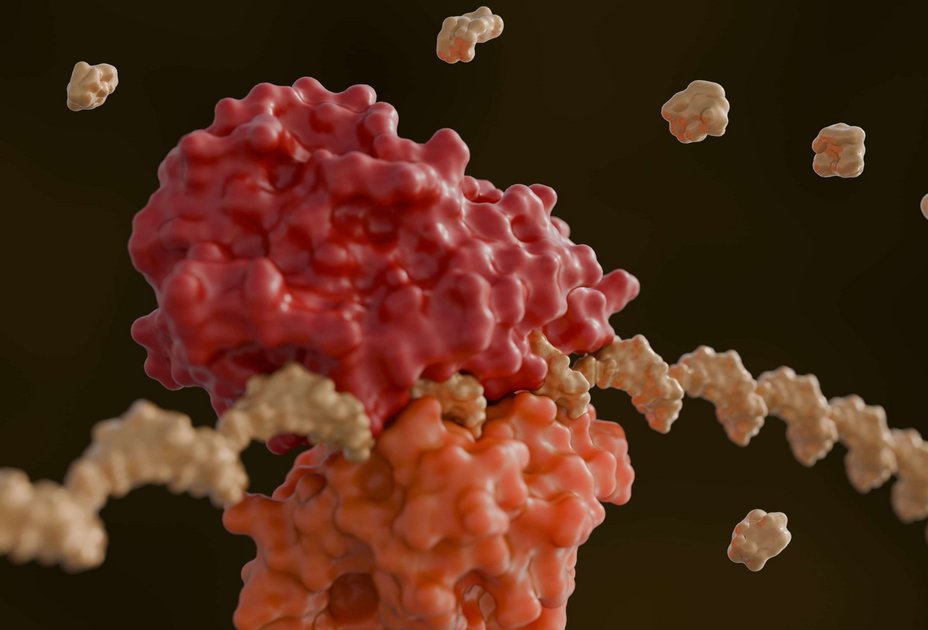
An international consortium of researchers with teams from teams in Israel, Germany, USA, France, Japan, China, Austria and Poland discovered that ribosomes of organisms thriving at extremly high temperatures maintain the structural integrity of their macromolecules through dynamic regulation of specific RNA modifications. The work was cooridnated and led by Schraga Schwartz and Moran Shalev-Benami from the Wizmann Institute and recently published in Cell.
The team of Sebastian Glatt, professor for systems genetics at the Vetmeduni and group leader at the Malopolska Centre of Biotechnology of the Jagiellonian University used their recently developed method, called DyRNA Thermometry, to confirm the effects that other teams of the consortium have seen in vivo using puirfied RNA components. This approach, developed by Jakbub Nowak, enables highly precise monitoring of conformational changes in RNA as a function of temperature and environmental conditions by exploiting temperature-dependent variations in fluorescence intensity. Using this method, the researchers demonstrated that chemical modifications of ribosomal RNAs, such as methylation (m⁵C) and acetylation (ac⁴C), act synergistically to enhance the stability of specific regions within the RNA. The discovery provides direct experimental evidence that local conformational stabilization through RNA modifications is a key mechanism for maintaining the structural and functional equilibrium of ribosomes at elevated temperatures.
Dr Nowak explains: “The DyRNA Thermometry method allows direct measurement of RNA stability at a local scale, enabling us to trace how specific chemical modifications influence the structural equilibrium of RNA. This precision lets us detect subtle changes that are essential for preserving the molecule’s proper conformation.” Dr. Glatt adds: “This is a clear example of how integrating biochemical, structural, and biophysical approaches helps us to understand how RNA preserves its function under extreme conditions. RNA modifications act as regulators of conformational stability, allowing the molecule to retain its correct architecture even under significant temperature fluctuations.”
The experiments conducted by Dr. Jakub Nowak were performed using the recently establihsed Core Facility for Macromolecular Characterisation (MCCF) at MCB UJ. The project was funded by the European Research Council (ERC) under the Horizon 2020 programme (Grant No. 101001394, SG).
The article "Pan-modification profiling facilitates a cross-evolutionary dissection of the thermoregulated ribosomal epitranscriptome" by Garcia-Campos M.A. et al. was published in Cell.
Glatt Lab
Malopolska Centre of Biotechnology
Jagiellonian University
European Research Council (ERC)
Weizmann Institute of Science
*Press Release: Malopolska Centre of Biotechnology/Jagiellonian University Krakow, 02.12.2025