- Home /
- University /
- Infoservice /
- Press Releases /
- Tech smart dogs – are touchscreens revolutionising behavioural research?
Research
Tech smart dogs – are touchscreens revolutionising behavioural research?
Dogs are smart – smart enough to use a touchscreen. That’s the conclusion of a recently published study by the Konrad Lorenz Institute of Ethology (KLIVV) at the University of Veterinary Medicine, Vienna. The team reviewed existing studies that used touchscreens in experiments with dogs. According to the researchers, this digital tool offers several advantages, including protection against unwanted influence from experimenters, who are typically present during trials. To unlock the full potential of touchscreens in dog cognition research, the authors advocate for standardised approaches to deploying such systems.
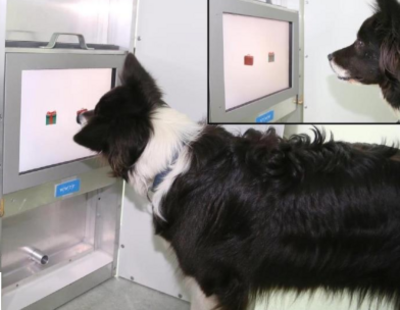
Dogs (Canis familiaris) are a popular model in comparative cognition research. Traditional research paradigms often rely heavily on experimenter involvement, which can introduce bias and inconsistency. Technology can help address this, says first author Siqi Yang-Fu from KLIVV’s Domestication Lab: “Touchscreen-based, automated systems improve standardisation, reduce experimenter influence, and enhance data quality. They are also already widely used in research with various animal species.”
However, touchscreens have so far played only a minor role in dog research. This is underscored by the team’s systematic review of studies on canine behaviour and cognition using touchscreen-based methods. Such studies remain rare – the researchers identified only 14 publications.
Overcoming obstacles …
According to co-senior author Friederike Range, Deputy Head of KLIVV, three key barriers currently limit broader adoption: “On the one hand, there are technical challenges, such as the need for interdisciplinary expertise. Practical barriers include high costs and a long and time-consuming training process with the animals. In addition, there are species-specific constraints – ‘Umwelt’-related issues such as some dogs’ tendency to tap the touchscreen with their paws as opposed to their noses, .” The authors propose concrete strategies to address these hurdles, including open-source solutions, stronger collaboration among research institutions, and the development of equipment better tailored to dogs’ ‘Umwelt’.
… and harnessing promising advantages
“Touchscreen-based methods hold great promise for advancing behavioural research in dogs,” concludes co-senior author Tiago Monteiro of KLIVV’s Domestication Lab. With a collaborative, open, and dog-centred approach, these methods could be adopted at scale. This would improve the reproducibility of findings, accelerate the generation of new insights, and provide more objective indicators of canine behaviour and cognitive abilities.
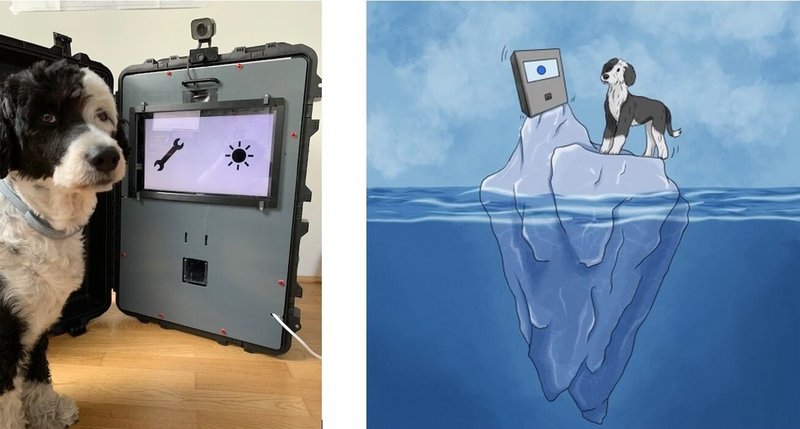
The article „On the (limited) use of touchscreen-based behavioural and cognitive research with dogs: potential causes and future directions“ by Siqi Yang-Fu, Christian Menne, Chiara Canori, Dániel Rivas-Blanco, Oli Green, Friederike Range and Tiago Monteiro was published in „Animal Cognition“.
Scientifc article
Scientific contact:
Tiago Monteiro, PhD
Konrad Lorenz Institute of Ethology/KLIVV
Department of Interdisciplinary Life Sciences
University of Veterinary Medicine Vienna
tiago.monteiro@vetmeduni.ac.at