- Home /
- University /
- Infoservice /
- Press Releases /
- Tips for animals: Danger from ticks on animals
University
Tips for animals: Danger from ticks on animals
Ticks are not only annoying parasites, but can also transmit dangerous diseases. Anyone taking their four-legged friend for a walk in the countryside should therefore keep a watchful eye and be aware of the use of tick repellents and first aid measures in the event of an emergency. The Vetmeduni's tips will help you to protect yourself and your dog.
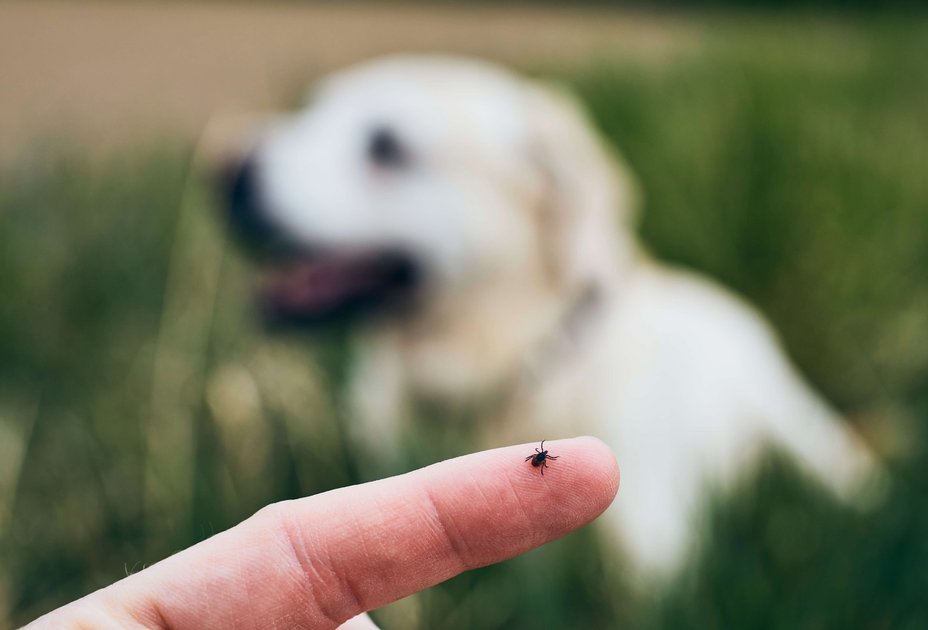
Photo: Shutterstock
Good to know
- Ticks do not fall from trees, but usually sit on the top of tall grass or shrubs up to 1.5 metres high.
- Ticks look for a host from an outside temperature of 5°C to 7°C, but only really feel at home from a temperature of 15°C to 20°C and in humid weather.
- Ticks secrete secretions to inhibit blood clotting and pain at the site of the bite - this allows them to suck blood undisturbed for several days.
- The most common tick species in Austria is the "common wood tick", followed by the brown tick, which is mainly active in spring and autumn as well as on mild winter days. The relict tick is most active during the summer months.
- If a tick is up to five times the size of the "common wood tick" commonly found in Austria and its legs have a white-striped colour, it could be the species "Hyalomma marginatum" (tropical giant tick). If you suspect that you have discovered this tick species or have been bitten by it, you must consult a doctor immediately, as it can transmit the life-threatening Crimean-Congo fever virus.
Risk of disease
- Diseases that can be transmitted by ticks: E.g. tick-borne encephalitis (TBE), Lyme disease, babesiosis, ehrlichiosis or rickettsiosis.
Tick areas
- The pesky bloodsuckers are at home almost everywhere dog owners take their four-legged friends for a walk: in addition to meadows, forests, the banks of lakes and rivers, city parks and roadsides are also among the favourite habitats of ticks. Mild winters and climatic changes also allow ticks to penetrate higher altitudes.
Protection
- Animals should be checked for ticks after every walk - they often attach themselves to the chest, ears and head.
- There are special collars and spot-ons for external application for dogs and cats.
- Hedgehogs, mice or martens can bring ticks into the garden. Well-intentioned food from the garden (e.g. grass, dandelions) can bring ticks into the house.
Removing ticks correctly
- Ticks are best removed with tweezers or tick tweezers. This requires a slight twisting motion.
- Grasp the tick as close to the skin as possible and then attach it to an adhesive strip.
- Take care not to crush the tick when twisting it out!
- Dispose of the tick in the household waste.
- Do not use any additives such as alcohol, oil or nail varnish remover.

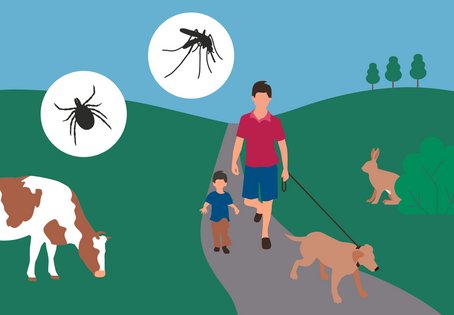
Infographic "Danger from ticks in animals"
Graphic: Matthias Moser/Vetmeduni
Expert input: Clinical Centre for Small Animals/Vetmeduni