Research
A Resounding Success: Synergy Grant for the Vetmeduni Austria’s LifeOfTRNA Project
The University of Veterinary Medicine Vienna (Vetmeduni Austria) has joined the top tier of European research with the project “LifeOfTRNA – Decoding the Molecular Mechanisms of tRNA Modifications,” led by Sebastian Glatt. The 72-month research project is a collaboration among researchers from Austria, Poland, Switzerland and France and aims to gain a comprehensive understanding of the functions of tRNA modifications in humans. This fundamental research is also of great importance for improving the future treatment of neurodegenerative diseases and cancer.
The European Research Council (ERC) now recognizes the importance of this research and is awarding LifeOfTRNA a Synergy Grant. This is the EU’s most prestigious research grant. The ERC research award, worth 10 million euros, is being granted as part of the EU’s Horizon Europe research program. The research project is set to begin in May 2027.
Modifications of transfer RNAs (tRNAs) are introduced post-transcriptionally - i.e., after DNA has been transcribed into RNA - by specialised enzymes at specific positions. Mutations in these enzymes are associated with a number of human diseases. “Understanding the metabolic pathways through which these modifications are introduced, and how specific tRNA modifications influence cell physiology, is essential for deciphering their exact function and the molecular basis of many serious diseases,” explains Sebastian Glatt, project leader of LifeofTRNA and head of Systems Genetics Sebastian Glatt. The LifeofTRNA project now aims to gain a comprehensive understanding of the functions of tRNA modifications in humans.
Three Key Research Questions Concerning tRNA Modifications
The researchers have divided their work into three clearly defined work packages. First, the researchers aim to elucidate the spatial and temporal coordination of tRNA modifications and their role in fine-tuning tRNA structure, dynamics and stability. “We will conduct a series of complementary analyses to investigate the functional relationship between tRNA modifications, folding, structure and stability,” says Glatt. “
The team will then investigate how tRNA modifications shape the tRNA interactome and why certain mutations lead to disease. Glatt explains: “Our research teams will systematically analyse tRNA-interacting factors, as well as the impact of tRNA modifications on these interactions, in silico, in vitro and in vivo.” We will investigate the contribution of specific modifications to the dynamic regulation of the human tRNA interactome in both healthy and diseased states.” According to Sebastian Glatt, key subprojects include the creation of a reference human tRNA interactome, as well as the analysis and prediction of the effects of tRNA modifications and clinical mutations on the tRNA interactome.
Finally, the researchers will investigate how RNA modifications influence the synthesis of the entire cellular proteome and translation dynamics. To this end, they will comprehensively examine the role of tRNA and mRNA modifications in the ribosomal decoding centre during translation, as well as their effects on cellular physiology.
Four Research Groups, One Shared Vision
This multidisciplinary and complementary team consists of four leading European laboratories. They combine atomic, molecular, cellular, and computational approaches to analyze the structural and functional consequences of tRNA modifications in humans. The teams are led by Sebastian Glatt (University of Veterinary Science Vienna/Austria), Janusz Bujnicki (International Institute of Molecular and Cell Biology/Warsaw, Poland), Sebastian Leidel (University of Bern, Switzerland) and Carine Tisné (National Center for Scientific Research/France). Working closely together, the researchers will uncover the molecular logic behind tRNA modifications - from chemical details all the way to cellular physiology. Glatt anticipates a major impact: “We expect our findings to fundamentally transform our understanding of tRNA biology in humans and reveal new principles linking RNA chemistry to cellular and organism-wide functions.”
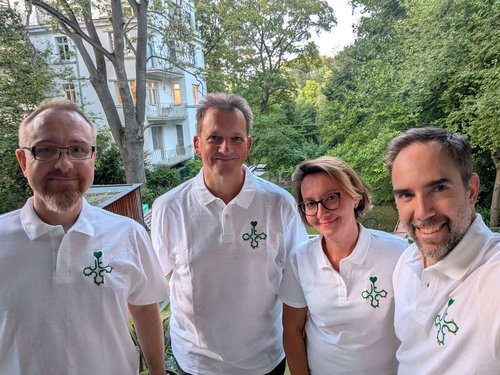
For Sebastian Glatt, this is already the second ERC grant awarded to one of his projects. The geneticist and molecular biologist received his first ERC Consolidator Grant while serving as a Max Planck research group leader at the Jagiellonian University in Kraków, Poland. Having spent 16 years abroad, the Vienna native returned to Vienna in the winter semester of 2024 and is now conducting research and teaching as Professor of Systems Genetics at the University of Veterinary Medicine Vienna.
Glatt served as Scientific Director of the research centre in Kraków for five years. He also founded the Polish National Centre for Cryo-Electron Microscopy at the Solaris Synchrotron in Kraków and has served as its manager since 2024. In addition, he is Head of the Department of Biological Sciences and Pathobiology at Vetmeduni Austria.
In 2021, he was named Young Scientist of the Year in Poland – the first Austrian to receive this distinction – and in 2024, he was named Natural Scientist of the Year in Poland. Also in 2024, he was elected one of the youngest members of the European Molecular Biology Organization (EMBO). EMBO membership is highly selective and is awarded only to leading researchers in the life sciences.
tRNAs – Extensive Modifications as an Evolutionary Optimization Strategy
Transfer RNAs (tRNAs) are essential for translating genetic information into proteins and play a central role in regulating gene expression. Over the course of evolution, tRNAs have been optimized to fulfill this vital function by
expanding the four canonical (basic) RNA nucleotides (A, C, G, and U) into a wide variety of chemically modified nucleotides. tRNAs are the most extensively and diversely modified RNA species, with five to 15 modifications per molecule. These modifications ensure the maturation, structure, stability, and decoding ability of tRNA during translation. They also provide the diversity that enables cells to adapt protein synthesis to developmental and environmental signals.
Scientific contact:
Univ.-Prof. Dr. Sebastian Glatt
Systemgenetik
Veterinärmedizinische Universität Wien
Sebastian.Glatt@vetmeduni.ac.at