Research
Encephalitis in Red-legged Partridges
Pegivirus in the Spotlight
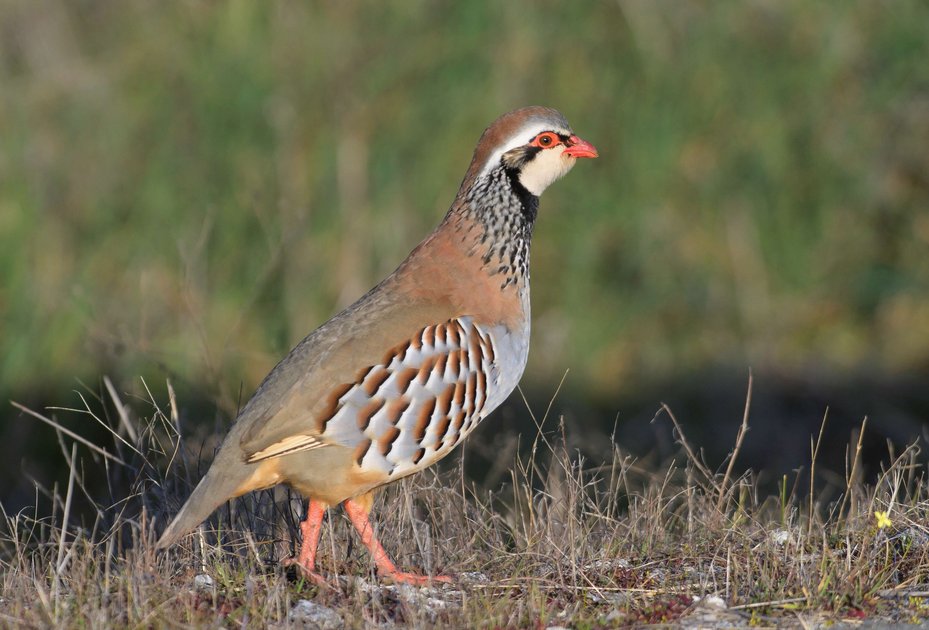
Researchers at the University of Veterinary Medicine, Vienna (Vetmeduni) have published a study in Nature Communications describing an avian pegivirus associated with encephalitis in red‑legged partridges. The work provides compelling evidence that this virus can infect the nervous system of various bird species and, under experimental conditions, reproduces neurological disease and encephalitic lesions in red‑legged partridges.
Pegiviruses belong to the family Flaviviridae, which also includes several viruses of medical and veterinary importance. Pegiviruses, however, were long considered largely nonpathogenic or of unclear disease relevance. Ivana Bilic from Vetmeduni’s Clinical Unit for Population Medicine for Fish, Pig, and Poultry contextualizes the findings: “Pegiviruses have long been regarded as viruses with unclear or limited disease relevance. Our results show that an avian pegivirus can reach the brain and be associated with encephalitis - opening new questions about the biology and pathogenesis of pegiviruses.”
Incidents with neurological symptoms
The research originated from natural outbreaks of neurological disease in red‑legged partridges in France. Affected birds exhibited symptoms consistent with central nervous system disease. Initial diagnostic tests for known avian neurotropic viruses - including West Nile virus, Usutu virus, avian influenza virus, Newcastle disease virus, and avian encephalomyelitis virus - were negative. Histological examination of brain tissue, however, strongly suggested a viral infection.
Using next‑generation sequencing (NGS), the researchers identified pegivirus sequences in affected birds. Further molecular and pathological analyses showed that the virus is detectable in neural tissues and is associated with lesions in the central nervous system. Ivana Bilic emphasizes: “The virus is detectable in neural tissues and is associated with lesions in the central nervous system.”
From field observation to experiment
A key feature of the study is that the findings are supported not only by field observations but also by experimental infection studies in different bird species. Red‑legged partridges, grey partridges, and specific‑pathogen‑free (SPF) chickens were experimentally infected. The virus showed systemic spread and neurotropism across species. Study leader Miguel Matos summarizes the core results: “The virus can infect the nervous system of various bird species and, under experimental conditions, reproduces neurological disease and encephalitic lesions in red‑legged partridges.”
To conduct a comprehensive investigation, the team combined a broad methodological spectrum, including next‑generation sequencing, phylogenetic analyses, histopathology, transmission electron microscopy, RT‑qPCR, RNAscope in situ hybridization, immunohistochemistry, magnetic resonance imaging (MRI), experimental infection studies, and assays that demonstrate viral replication in infected tissues. Miguel Matos highlights the study’s approach: “This study is a good example of clinically driven veterinary research. It began with a real disease problem observed in the field and evolved into a wide‑ranging investigation that combines pathology, molecular virology, imaging, and experimental infection studies.”
Beyond its immediate relevance for avian medicine, the study lays a foundation for future research on the neurotropism of pegiviruses, viral pathogenesis, and host–virus interactions. It also underscores the importance of integrating field observations, clinical veterinary medicine, pathology, imaging, and molecular virology in the investigation of emerging infectious diseases.
Note: The work was led by Miguel Matos and Ivana Bilic of Vetmeduni’s Clinical Unit of Poultry Medicine under the guidance and with the support of Michael Hess. The study was conducted in collaboration with veterinarians in France, Vetmeduni’s Diagnostic Imaging Unit, and the Institute for Veterinary Disease Control at AGES.


The article "A pegivirus associated with encephalitis in red-legged partridges shows neurotropism across avian species." by Matos, M., Bilic, I., Viloux, N. et al. was published in Nature Communications.
Scientific article
Scientific contact:
Miguel Matos PhD.
Klinisches Zentrum für Populationsmedizin bei Fisch, Schwein und Geflügel
Veterinärmedizinische Universität Wien (Vetmeduni)
Miguel.Matos@vetmeduni.ac.at