- Home /
- University /
- Infoservice /
- News /
- Nimble climbers with dense fur – Facts about the edible dormouse
Nimble climbers with dense fur – Facts about the edible dormouse
The edible dormouse, a small rodent with large button eyes and plush fur, is a fascinating inhabitant of our forests. On the occasion of Siebenschläfer Day on June 27, we take a look at the special traits of this nocturnal animal, which impresses not only with its record-breaking hibernation but also with its adaptability and way of life.

Order: Rodentia
Family: Gliridae (dormice)
Genus: Glis
Species: Edible dormouse (lat.: Glis glis)
Body length: approx. 14 cm
Tail length: approx. 11 cm
Weight: approx. 100 g in early summer
Lifespan: up to 14 years
Range: Continental Europe, Asia Minor, Caucasus to northwestern Iran
Facts about the edible dormouse Habitat and shelter
Edible dormice feel particularly at home in deciduous and mixed deciduous forests, where they use the tree canopy as their habitat. They are also found near humans: garden sheds, attics, or unoccupied nest boxes serve as shelters. They often betray their presence through thumping noises or their characteristic whistling.
Diet
Edible dormice forage primarily in the treetops. Their preferred food sources are energy-rich nuts, seeds, acorns, beech mast, fruit, buds, berries, and blossoms. They also readily make use of fruit trees and shrubs to fatten up for the long hibernation.
Family planning and offspring
Edible dormice are true masters of family planning. In so-called mast years, when beeches and oaks produce abundant seeds, there is especially high reproductive output. In mast‑failure years, when these seeds are lacking, mating and the rearing of young may fail completely. After a gestation period of about 30 days, a female gives birth to two to nine young, which weigh only about four grams at birth - about as much as two euro cent coins. In our latitudes, the typical birth period is early August. The young are raised in tree cavities or nest boxes, with females raising the offspring alone.
Special adaptations
The edible dormouse’s large eyes and long whiskers help it orient in the dark. In early summer it weighs about 100 grams, but before hibernation it can double its weight to over 200 grams. Another survival strategy is its tail: if seized by a predator, the thin skin can tear, allowing the dormouse to escape. The remaining bony part later dries out and is gnawed off.
Cuddling out of necessity
Edible dormice are mostly solitary. It’s different when it gets cold. In groups of up to 16, they huddle closely together during daytime rest to save energy and keep each other warm. Related animals are more often found snuggled up together.
Hibernation: world record holder
The edible dormouse is a true world champion of hibernation. While other animals rest for only a few months, the dormouse can spend up to 11 months in its den. These extreme durations occur only in years with little food available. In such years, well-nourished individuals forgo raising young and disappear back underground as early as July to hibernate. In this way they optimize survival in bad times. Juveniles in particular would not survive in poor years, so dormice prefer to skip reproduction entirely. Hibernation thus helps them survive the cold, food-scarce season and also avoid many predators.
Conservation and predators
As a native wild animal, the edible dormouse is protected and may neither be persecuted nor killed. Its natural enemies include cats, martens, weasels, and owls.
Curiosities from history
In ancient Rome, edible dormice were considered a delicacy. They were fattened in special clay vessels and prepared in a variety of ways. Competitions for the “fattest” dormouse were even common. In some regions, such as Slovenia and Croatia, the edible dormouse is still eaten today. In Croatian folk costume, the men’s cap is made of dormouse fur.

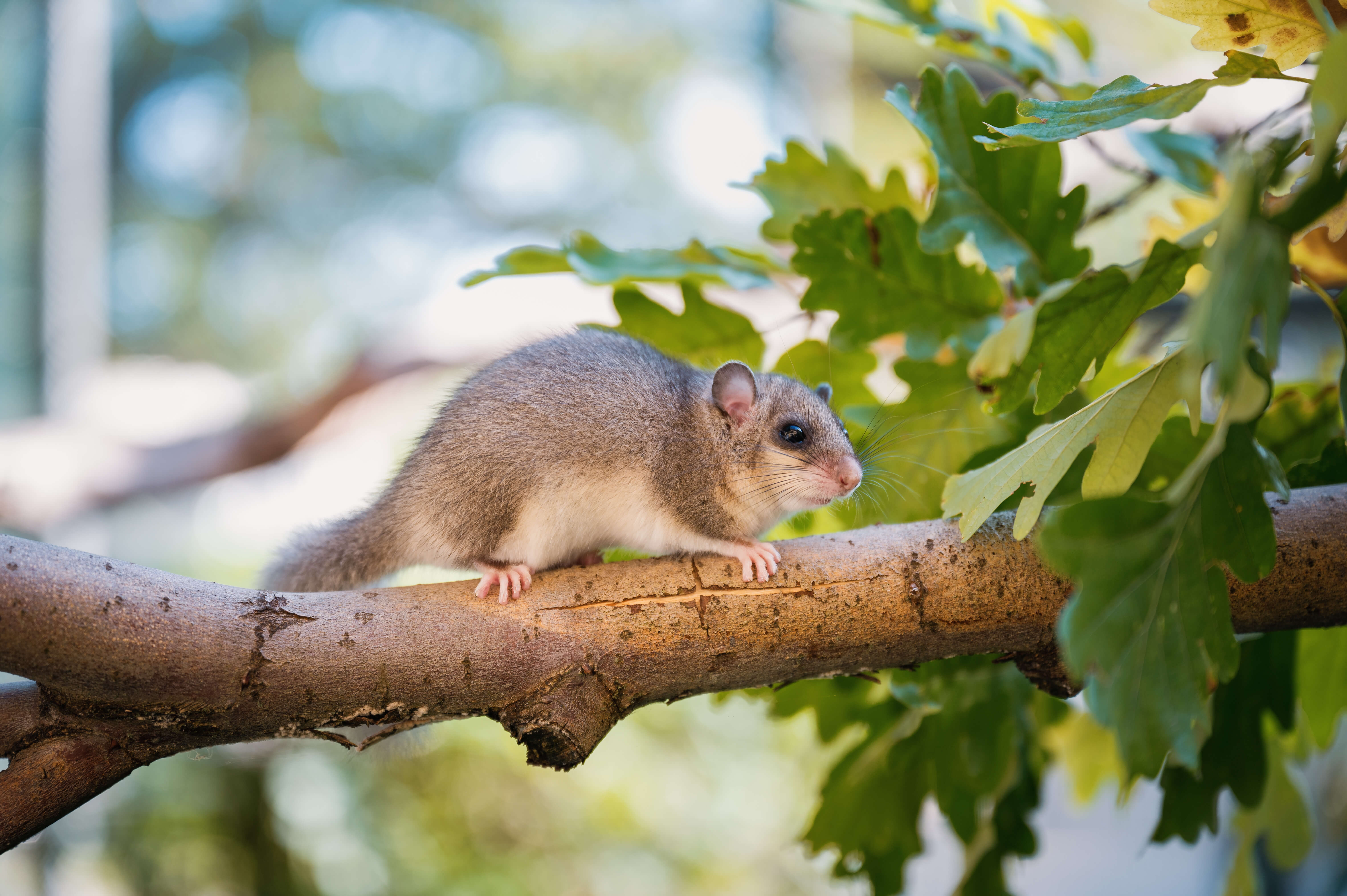
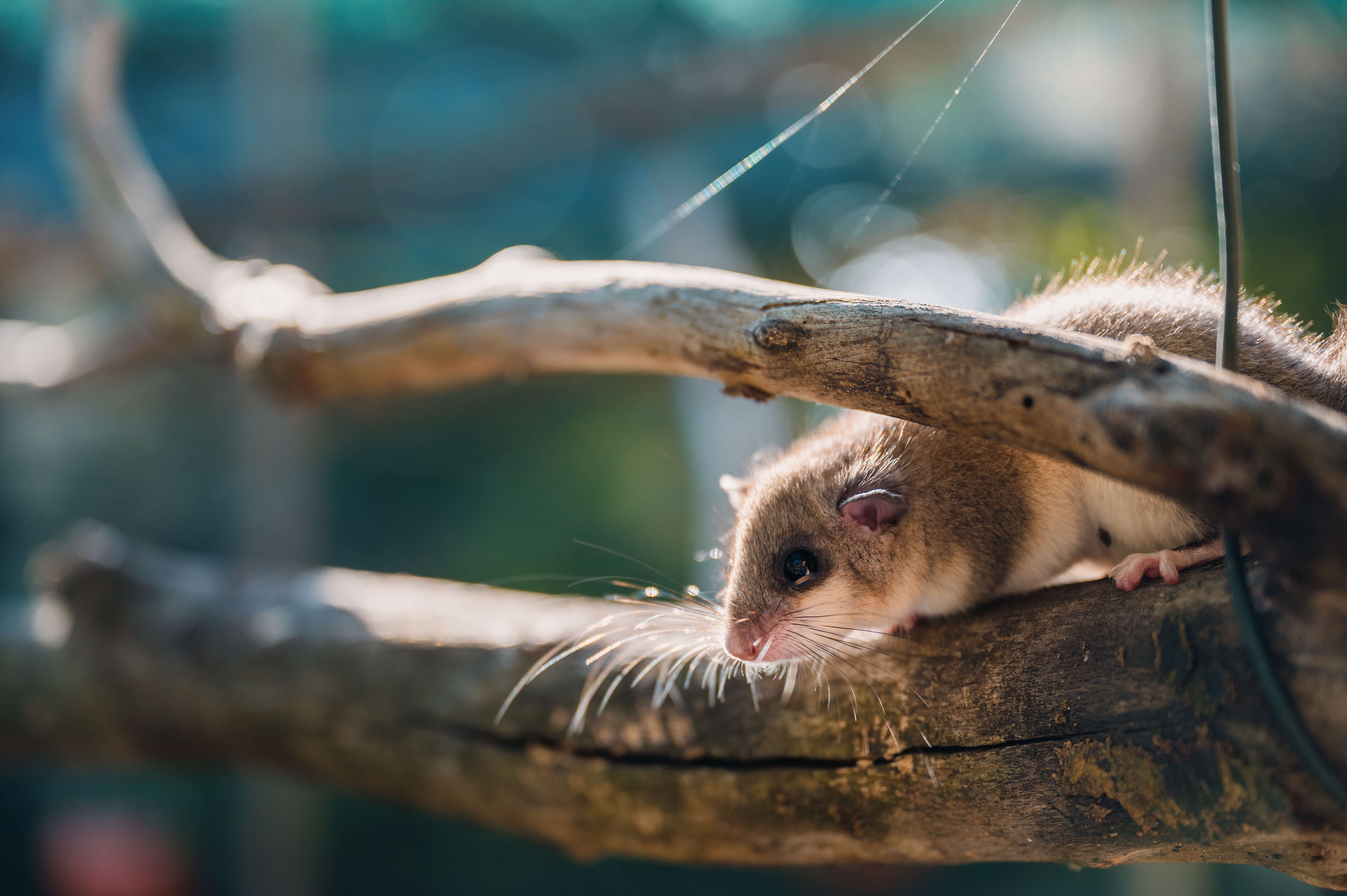

“Siebenschläfer Day” is held annually on June 27. According to a traditional weather lore, the prevailing weather on this day predicts the conditions for the next seven weeks. Despite the shared name, the day has nothing to do with the dormouse. It derives its name from a legend in which seven Christians were walled in alive for their faith, supposedly slept for nearly 200 years, and survived.
Edible dormice on the Wilhelminenberg
Siebenschläfer Day on June 27 reminds us each year that research on the edible dormouse has a long tradition on the Wilhelminenberg and thus at Vetmeduni. As early as 1960, Lilli König published a comprehensive monograph on dormouse behavior at the Konrad Lorenz Institute of Ethology (KLIVV). In the late 1990s, this tradition was revived by Claudia Bieber at the Research Institute of Wildlife Ecology (FIWI) when she reestablished dormouse husbandry. A field study in the Vienna Woods also began in 2006. Since then, numerous publications have appeared and many young scientists have launched their careers by studying the ecology of this fascinating species.
Astonishing observations have been made during this time. It was first demonstrated that edible dormice are true masters of hibernation. Contrary to their German name “Siebenschläfer” (literally “seven-sleeper”), they do not sleep for just seven months, but on average eight to nine months per year. In years with low food availability and poor conditions for raising young, they can even hibernate for over eleven months by returning to their underground winter quarters already in summer. “It should be borne in mind,” explains Claudia Bieber, head of FIWI, “that hibernation has nothing to do with the kind of sleep we know at night. The animals periodically lower their metabolism, and during these phases the brain is almost completely shut down. Sleep, as we think of it, is not taking place.”
Despite the long history of research on the Wilhelminenberg, new questions keep arising. One central question is how climate warming will affect the biology of this species. There is thus much left to explore in the future.