- Home /
- University /
- Infoservice /
- Press Releases /
- The Household as a Blind Spot in Food Safety
Research
The Household as a Blind Spot in Food Safety
Household Refrigerators as Underestimated Microbial Ecosystems
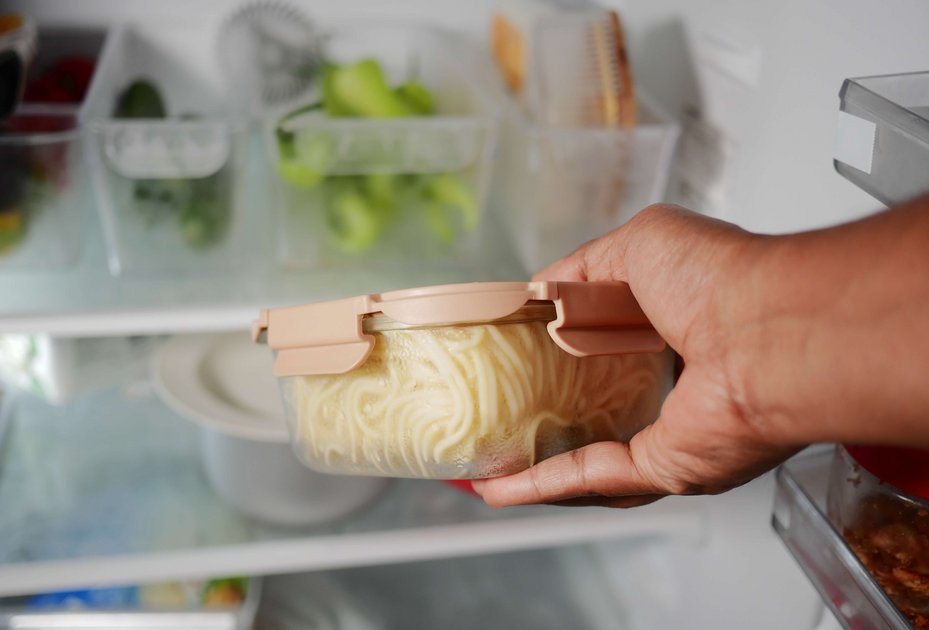
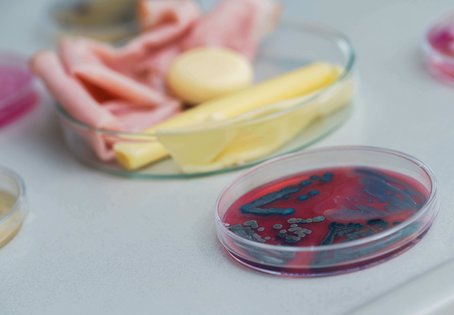
Household refrigerators are considered one of the most important barriers against foodborne infections. They slow microbial growth, extend shelf life, and are a central component of the cold chain. However, a new study by Vetmeduni reveals that refrigerators are far more than inertstorage spaces: they are complex, dynamic microbial habitats with direct relevance to food safety, hygiene, and antibiotic resistance.
The team led by Evelyne Selberherr from the Center for Food Sciences at Vetmeduni was the first to use high-resolution shotgun metagenomics to investigate the microbial communities on refrigerator surfaces in private households. The study not only identified bacteria and fungi down to the species level but also quantified microbial loads and systematically recorded antibiotic resistance genes.
Hygiene Trumps Temperature Control
International organizations such as the WHO, EFSA, and FDA recommend operating household refrigerators at temperatures below 4–5 °C to limit the growth of pathogenic microorganisms. While temperature profiles in households have been studied multiple times, an integrative analysis of the entire microbial community, including its functional properties, has been lacking. This new study fills that gap. In 45 household refrigerators, shelves were systematically sampled, accompanied by extensive metadata on temperature, usage habits, and cleaning practices. The results paint a nuanced picture: refrigerators are far from being microbiologically inert; they host highly diverse communities with several thousand species.
"The temperature measurements reveal a well-known but still relevant issue: only 38% of the refrigerators examined were below the recommended threshold of 5 °C, while 24% had temperatures exceeding 7 °C – a range considered an unfavorable worst-case scenario in food industry and research," explains Evelyne Selberherr. Remarkably, however, temperature alone did not show a significant impact on microbial diversity. Refrigerators with lower temperatures were not automatically microbiologically "cleaner." The decisive factor turned out to be the cleaning frequency – more specifically, the time since the last cleaning.
Microbial Risks from Poor Refrigerator Hygiene
Refrigerators that had not been cleaned for extended periods showed significantly higher microbial loads (bacterial cell equivalents), lower species diversity, and a dominance of a few particularly adaptable microorganisms. This structure is typical of mature, stable microbial communities, such as those found in biofilms. Such communities are more resistant to disturbances and can serve as reservoirs for undesirable microorganisms.
The findings suggest that hygiene practices have a more lasting impact than short-term temperature differences – an aspect that has been largely overlooked in consumer recommendations. The composition of refrigerator microbiomes reflects daily life: dominant were psychrotolerant and food-associated bacteria such as Acinetobacter, Pseudomonas, Psychrobacter, and Brochothrix, complemented by microorganisms from fermented foods and typical representatives of human skin flora.
The high taxonomic resolution of metagenomics revealed that even within dominant genera, there is a great diversity of species – an indication of constant new entries through food, hands, and surface contact.
"In 60% of the refrigerators examined, potentially pathogenic bacteria were detected. The most common was Bacillus cereus, followed by Staphylococcus aureus," says study lead author Moritz Hartmann. Classic cold chain pathogens such as Listeria monocytogenes were detected only sporadically, but their presence underscores that the domestic environment is not a risk-free endpoint in the food chain.
A Refrigerator as a Reservoir for Resistance
The findings indicate that cross-contamination, such as through the direct placement of unpackaged food or hand contact, plays a central role. A particularly socially relevant finding concerns the resistome analysis: antibiotic resistance genes were identified in numerous refrigerators, particularly against beta-lactams, tetracyclines, and aminoglycosides. Notably, there was a clear correlation between the age of the refrigerator and the burden of resistance genes. Older appliances showed significantly higher resistome levels, likely due to the long-term accumulation of stable biofilms.
This study demonstrates that antibiotic resistance is not confined to clinical settings but can also persist in private households. This finding strengthens the One Health approach and expands it to include a previously overlooked dimension. The study makes it clear: the refrigerator should not be viewed as a passive storage space but as an active interface between humans, food, and microorganisms.
"While temperature recommendations are widespread, there is still a lack of concrete, evidence-based guidelines for refrigerator hygiene. Our findings suggest that simple measures - such as regular cleaning- have a significant impact on microbiological safety. These findings are relevant not only for private households, but also for sensitive supply areas such as hospital kitchens, care facilities, and communal catering. Especially in places where particularly vulnerable groups of people are cared for, the microbiological significance of refrigerators should be more strongly integrated into prevention strategies," summarizes Evelyne Selberherr.
Conclusion: Cold Alone Does Not Guarantee Safety. Only the combination of temperature control and hygiene determines whether the refrigerator provides protection or becomes a microbial hotspot. The study provides a scientific basis for rethinking household refrigerators: not as passive technology but as microbial ecosystems with direct relevance to public health and food quality.
Note: This project is part of Sparkling Science/Project Micro-Tramper. The funding is provided by the OeAD. You can find information about the Micro-Tramper project here.
The article "Cold storage, hot spots: Household refrigerators as under-recognized hubs of microbial diversity" by Moritz Hartmann, Monika Dzieciol, Cameron R. Strachan, Narciso M. Quijada and Evelyne Selberherr was published in LWT - Food Science and Technology.
Scientific article
Scientific contact:
Assoz.Prof. Evelyne Selberherr PhD.
Zentrum für Lebensmittelwissenschaften
Veterinärmedizinische Universität Wien (Vetmeduni)
Evelyne.Selberherr@vetmeduni.ac.at