- Home /
- University /
- Infoservice /
- Press Releases /
- Beyond domestication: Dogs and wolves react similarly to human fear smell
Research
Beyond domestication: Dogs and wolves react similarly to human fear smell
Do dogs respond differently than wolves to the scent of human fear? Or do both share a basic sensitivity to human emotional states? A new study from the University of Veterinary Medicine Vienna shows that when dogs and wolves grow up under comparable conditions and are closely socialized with humans, both alter their behavior in the presence of human fear odor - and in similar ways. This suggests that such sensitivity is not solely a product of domestication.
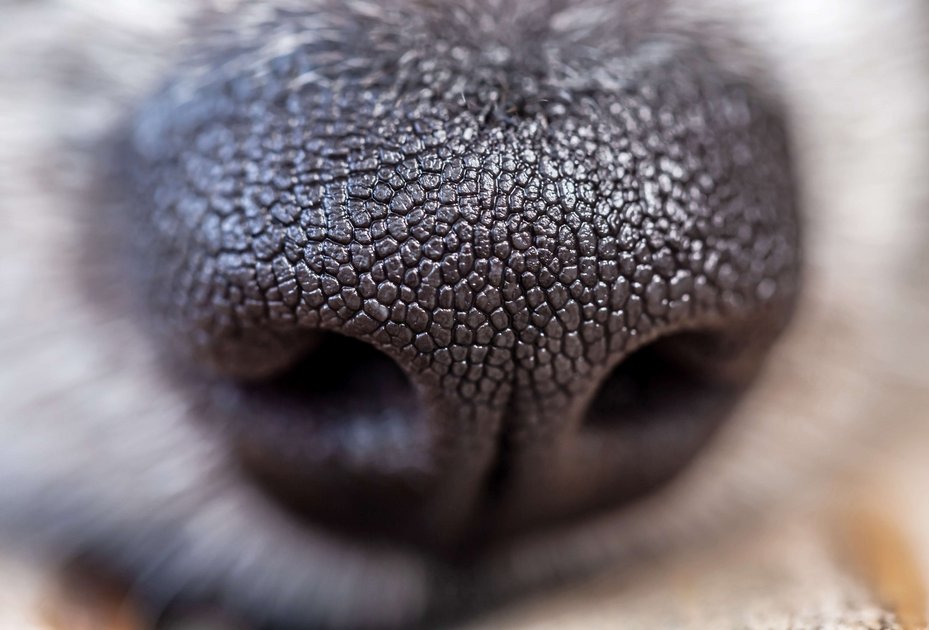
The study was conducted by the Domestication Unit at the Konrad Lorenz Institute of Ethology (KLIVV) at Vetmeduni. The team had hand-raised, human-socialized dogs and wolves choose between two targets. In the control condition, both targets held neutral human odor samples; in the experimental condition, one was neutral and the other contained fear sweat. Neither species showed a clear preference for a particular target. However, as soon as fear sweat was present, both species spent less time near the targets and looked more frequently at their handler - matching the general uncertainty-like response pet dogs show to fear odor. Dogs also ended sessions slightly more often when fear odor was present; this effect did not occur in wolves. At the same time, both species visited the targets more frequently in the presence of fear odor. Curiosity, confusion, or arousal may therefore also have played an important role.
No one-size-fits-all
A 2025 Vetmeduni study led by first author Svenja Capitain complements this picture: In tests with 61 dogs, the animals clearly reacted to human fear odor (for instance by looking more at their handler, lowering their tails, or taking longer to approach), but did not show a uniform avoidance response. Some dogs even approached the fear odor faster than the neutral one. This individuality points to influences such as life experience or training. Against this backdrop, the current wolf–dog study suggests that despite individual differences among dogs, there is a basic, cross-species sensitivity to human fear signals.
“Our results suggest that wolves as well as dogs respond to human fear signals - at least when they are familiar with humans,” says first author Svenja Capitain (KLIVV, Vetmeduni). “This brings a pre-domestication basis for this sensitivity into focus.”
Unconscious signals in everyday life
The next step is to determine the relative roles of species membership versus shared life experience with humans - and which other species respond to human emotions. Why this matters: Subtle, often unconscious human signals can shape animal behavior - not only in the lab, but also in situations where humans and animals interact closely, such as in training, veterinary clinics, or encounters with wildlife. A better understanding of such olfactory cues can help reduce stress, make interactions safer, and base decisions on a more solid behavioral-science foundation.
The study was conducted with 11 dogs and 8 wolves from the Core Facility Wolf Science Center (CF WSC). Human odor samples were provided by female donors who watched validated neutral or fear-inducing film clips. The animals’ behavior and choices were captured on video and analyzed statistically.
The article "Human-socialized dogs and wolves show similar behavioural reactions to human fear odour." by Capitain, S., Marshall-Pescini, S. and Range, F. was published in Animal Cognition.
Scientific article
Scientific contact:
Svenja Capitain MSc.
Konrad-Lorenz-Institut für Vergleichende Verhaltensforschung (KLIVV)
Veterinärmedizinische Universität Wien (Vetmeduni)
Svenja.Capitain@vetmeduni.ac.at