- Home /
- University /
- Infoservice /
- Press Releases /
- Courtship songs of male mice: why do males call if females do not come?
Research
Courtship songs of male mice: why do males call if females do not come?
During courtship, male house mice emit ultrasonic vocalizations, which show similarities to bird song, and their emission correlates with male mating success. Several studies, mostly with laboratory mice, found that females are attracted to male courtship songs; a result that helps to explain how they enhance male mating success. However, a newly published study by the Konrad Lorenz Institute of Ethology (KLIVV) at the University of Veterinary Medicine in collaboration with researchers at the Austrian Academy of Science, Vienna found that wild female house mice were not attracted to male courtship calls. The findings raise questions about the functions of male courtship vocalizations.
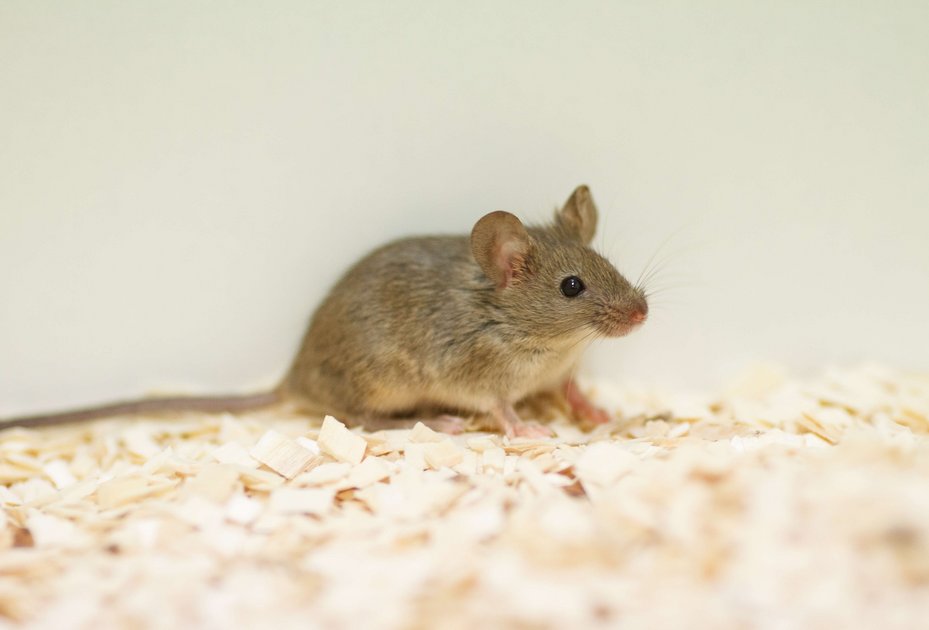
Ultrasonic vocalizations or USVs, inaudible to humans, are part of the courtship behavior of male house mice (Mus musculus). Researchers at the KLIVV found that wild house mice begin courtship with simple calls and then, just before copulation, they switch to emitting high numbers of complex vocalizations. Previous studies have found that females are attracted to playbacks of recordings of male USVs, and especially recordings with more complex calls. These studies were conducted mainly with laboratory mice and KLIVV researchers aimed to confirm these findings in wild house mice.
In a series of experiments, the KLIVV researchers tested the attraction of wild female mice in response to playbacks of recordings of male courtship songs. Contrary to expectations, females showed no preference for complex over simple call sequences. Moreover, females showed no attraction to males' complete courtship songs, which are composed of a mixture of both types of calls. Previous studies suggested that females’ attraction depends upon females’ estrous stage and exposure to male scent; however, these factors had no effect in this study. “The wild female mice were not attracted to male courtship calls in any of the contexts that we tested, which is surprising, as we took special care to follow protocols of previous studies," explains lead author Maja Peng of KLIVV.
But then why do males call if females do not respond?
Sarah M. Zala, the principal investigator of the project, emphasizes that their results do not exclude the possibility that females show interest in courtship songs in other contexts. Nevertheless, she points out that "These results force us to consider other possible functions of males' courtship songs. There are other ways that they could influence females, such as stimulating their sexual receptivity, and we have only recently begun to investigate such hypotheses."
A call to researchers: Keep questioning conventional wisdom
The researchers stress the critical importance of publishing negative findings in science, as they are too often put into a file drawer. “Our work shows that seemingly established assumptions must be experimentally replicated. Only then can we understand under which conditions communication signals fulfill their biological function. Moreover, our study underscores the importance of replication and reproducible research,” emphasizes Sarah Zala.
The article “Courtship vocalizations of male mice do not always attract females” by Maja Peng, Martina Zani, Reyhaneh Abbasi, Peter Balazs, Dustin J. Penn and Sarah M. Zala was published in Scientific Reports.
Scientific article
Scientific contact:
Sarah Zala PhD.
Konrad-Lorenz-Institut für Vergleichende Verhaltensforschung (KLIVV)
Veterinärmedizinische Universität Wien (Vetmeduni)
Sarah.Zala@vetmeduni.ac.at